


The Next Evolution in Analog System Design
Analog design is still largely fixed at the hardware level. When requirements change, the board changes. That usually means component swaps, layout revisions, and another validation cycle.
Okika’s Field Programmable Analog Array architecture approaches this differently. Instead of committing analog behavior to discrete components, engineers configure and refine it in software on reconfigurable analog hardware.
Our FPAAs are compact system-on-chip devices that combine precision analog resources with integrated digital control. Filters, gain stages, signal conditioning blocks, and control loops can be adjusted without redesigning the PCB.
For teams working on high-performance signal chains, this reduces iteration time and allows multiple architectures to be evaluated on the same hardware platform before locking anything down.
Why FlexAnalog™ FPAAs are relevant at DesignCon
- Reconfigurable analog blocks: Implement and tune filters, amplifiers, and conditioning stages without changing the board.
- Signal chain flexibility: Adjust bandwidth, gain, and transfer characteristics during development or after deployment.
- Integrated analog and digital control: The SoC architecture combines programmable analog with an embedded microprocessor for calibration, adaptation, and system-level coordination.
- Dynamic partial reconfiguration: On Apex Series FlexAnalog boards portions of the analog fabric can be updated in real time without stopping operation.
- Faster validation cycles: Explore multiple analog architectures on a single platform before committing to fixed-function silicon.

OTC2902K SoC FPAA
Okika’s OTCK290K system-on-chip Field Programmable Analog Array is built for engineers who need architectural control over their signal chain.
Fabricated on a 350 nm CMOS process, the device integrates a dense programmable analog fabric, digital resources, and an embedded microcontroller into a single reconfigurable platform. It provides one of the highest programmable analog block counts available, allowing complex filter networks, gain stages, and conditioning paths to be implemented and refined without redesigning hardware.
The Manhattan FPAA architecture enables structured analog routing and repeatable performance across configurations. Combined with the integrated 16-bit MSP430 core, the device supports calibration, adaptive control, and coordinated analog–digital behavior inside the same silicon boundary.
For teams evaluating multiple analog front-end architectures, the OTCK290K allows iteration at the configuration level rather than at the PCB level. Signal paths can be tuned, restructured, and validated on the same board before committing to fixed-function implementations.
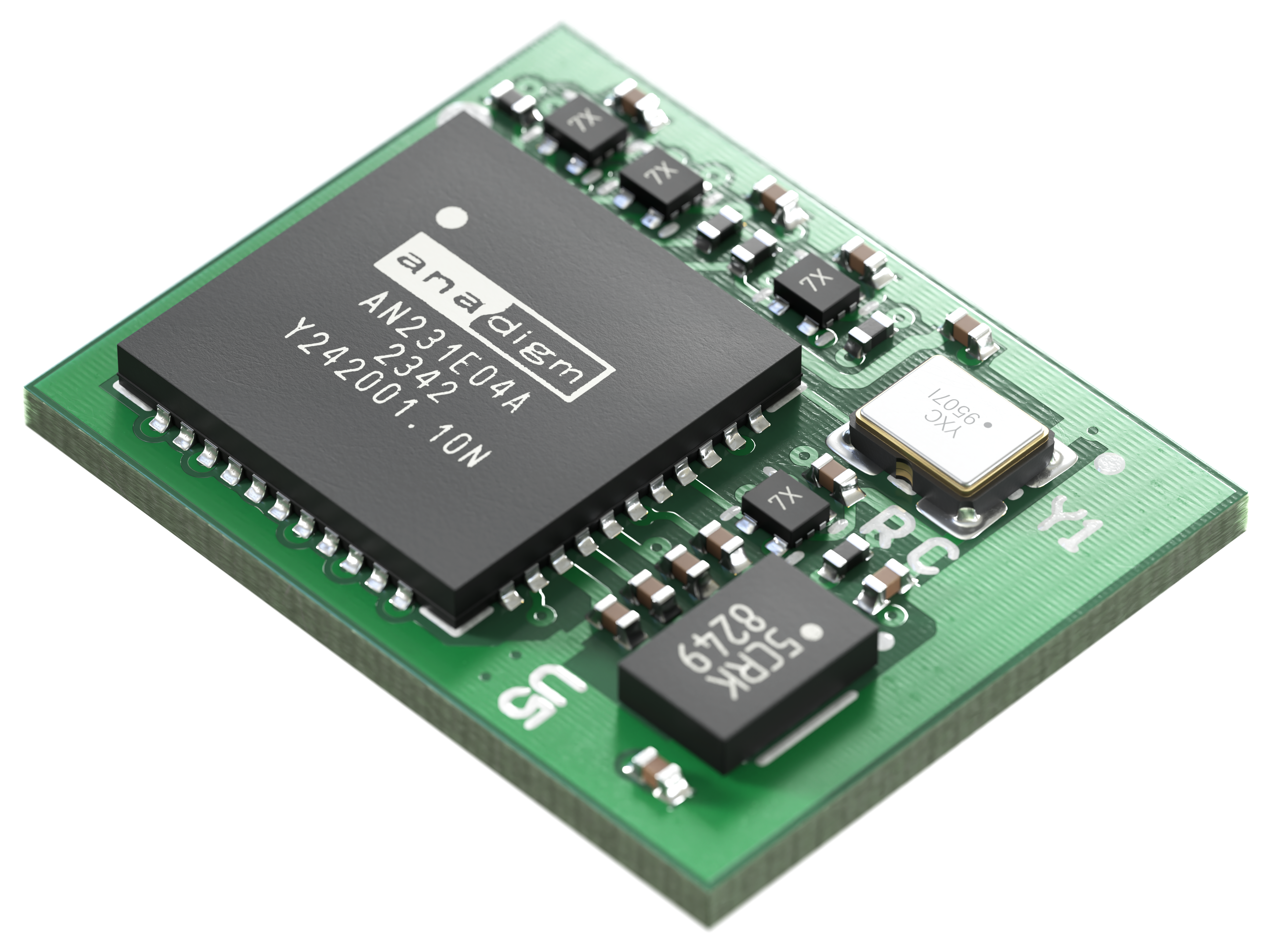
Introducing Chameleon™
Chameleon™ is a self-contained programmable analog subsystem built around Okika’s FPAA technology.
Each 14 × 11 mm LGA-32 module integrates the analog fabric, nonvolatile configuration memory, precision oscillator, and reconfiguration circuitry into a single package. No external microcontroller is required for operation. Once configured, it behaves as a dedicated analog device.
For DesignCon engineers evaluating front-end architectures, Chameleon allows filters, gain stages, and signal conditioning paths to be implemented and revised without redesigning the board. The module can be reprogrammed in-system through a standard 3.3 V SPI interface, enabling controlled iteration during development or updates after deployment.
Instead of locking analog behavior into fixed components, Chameleon keeps the signal path adjustable while maintaining a compact hardware footprint.
Watch how our technology works
See how Okika’s reconfigurable analog architecture delivers flexibility, speed, and precision across designs.
Anadigm Designer2 Design Lab
Anadigm Designer2 gives engineers direct control over the FPAA analog fabric, enabling signal paths to be defined and refined at the configuration level rather than the PCB level.
Within a schematic-based environment, designers implement filters, gain stages, conditioning blocks, and control functions, simulate behavior, and deploy configurations directly to hardware. Alternative transfer functions and topologies can be evaluated on the same board without layout changes.
Used with the FPAA Development Kit, the platform supports structured analog architecture exploration and short validation cycles before committing to fixed-function implementations.