


EN
What Is an FPAA?
An FPAA (Field Programmable Analog Array) is a reconfigurable analog integrated circuit that enables analog functions to be programmed and updated similarly to how FPGAs configure digital logic.
Instead of designing and respinning fixed-function analog hardware for every iteration, engineers can:
- Reconfigure analog signal paths
- Modify filters and gain stages in software
- Prototype analog systems rapidly
- Adapt hardware behavior dynamically
- Reduce analog redesign cycles
This creates new opportunities in embedded systems, sensing, instrumentation, robotics, industrial electronics, defense systems, education, and research.

OTC2902K SoC FPAA
Okika’s OTCK290K system-on-chip Field Programmable Analog Array gives engineers architectural control over the analog signal chain through a highly reconfigurable mixed-signal platform. Built on a 350 nm CMOS process, it combines programmable analog fabric, digital resources, and an integrated 16-bit MSP430 microcontroller in a single device.
Its Manhattan FPAA architecture supports complex analog routing, adaptive control, calibration, and rapid signal-chain iteration without repeated PCB redesigns. Engineers can refine filters, gain stages, and front-end architectures directly through configuration before committing to fixed-function hardware.
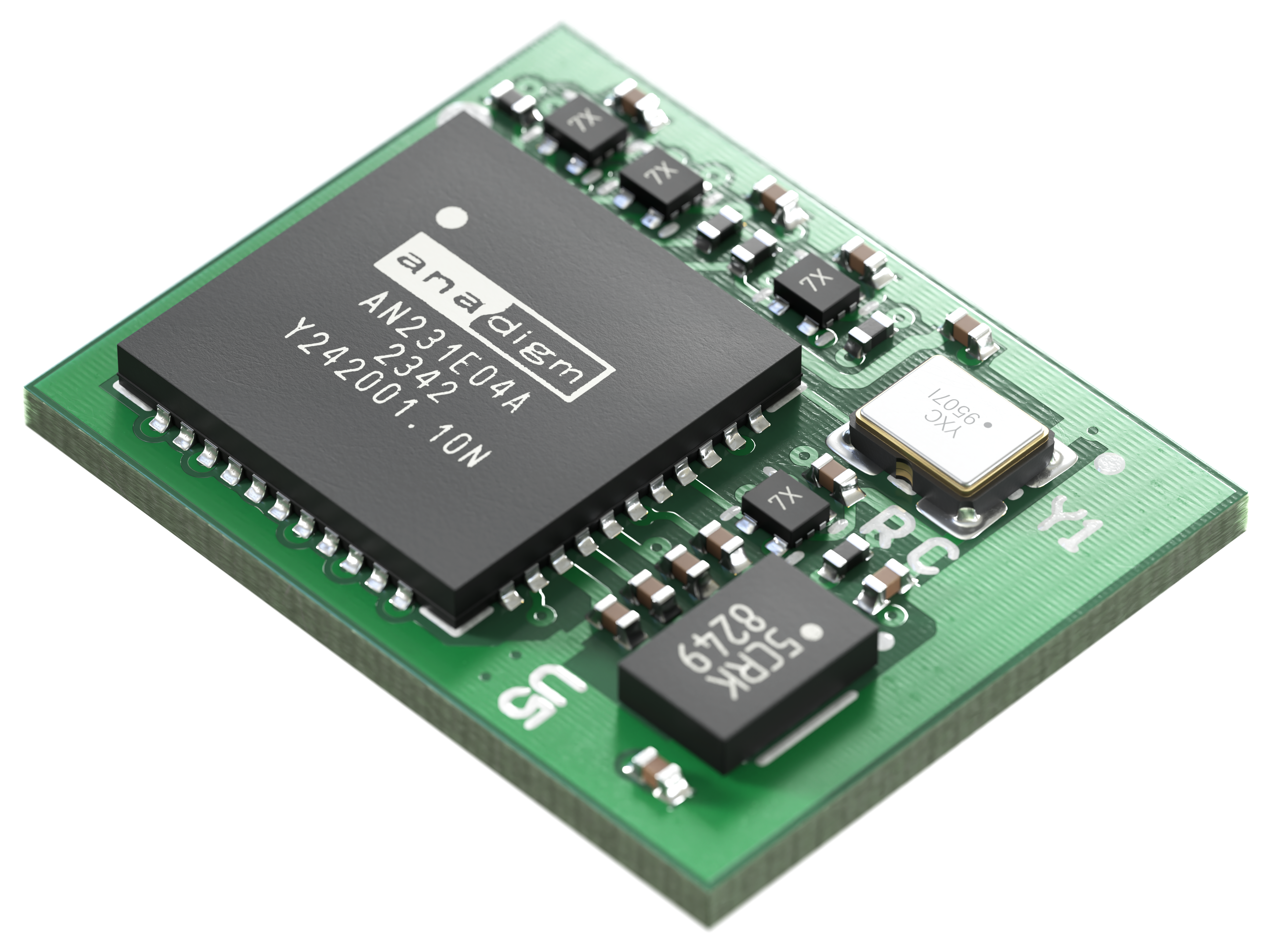
Introducing Chameleon™
Chameleon™ is a self-contained programmable analog subsystem built around Okika’s FPAA technology.
Each 14 × 11 mm LGA-32 module integrates the analog fabric, nonvolatile configuration memory, precision oscillator, and reconfiguration circuitry into a single package. No external microcontroller is required for operation. Once configured, it behaves as a dedicated analog device.
For DesignCon engineers evaluating front-end architectures, Chameleon allows filters, gain stages, and signal conditioning paths to be implemented and revised without redesigning the board. The module can be reprogrammed in-system through a standard 3.3 V SPI interface, enabling controlled iteration during development or updates after deployment.
Instead of locking analog behavior into fixed components, Chameleon keeps the signal path adjustable while maintaining a compact hardware footprint.
Featured products
-

OTC2310K04-PIKA
OTC2310K04-PIKA Raspberry Pi HAT with 4 AN231E04 Chips
$156.00Raspberry Pi HAT Development Board incorporating 4 FlexAnalog™ Field-Programmable Analog Array (FPAA) Integrated Circuit Components. -

AN231K04-QUAD4
AN231K04-QUAD4 Quad FlexAnalog™ FPAA development board for AN231E04
$299.00Development board with four (4) AN231E04 chips, power supply, programming circuitry, and prototyping space. -

OTC2312
FlexAnalog™ Arduino Shield
$81.25Arduino Uno-compatible FPAA development shield featuring the AN231E04 Field Programmable Analog Array. -

AN231K04-SING1
AN231K04-SING1 Single FlexAnalog™ FPAA Development Board
$156.00Development board with one (1) AN231E04 chip, power supply, programming circuitry, and prototyping space. -

AN231K04-DUAL2
AN231K04-DUAL2 Dual FlexAnalog™ FPAA Development Board
$219.00Development board with two (2) AN231E04 chips, power supply, programming circuitry, and prototyping space.

- Choosing a selection results in a full page refresh.
- Opens in a new window.