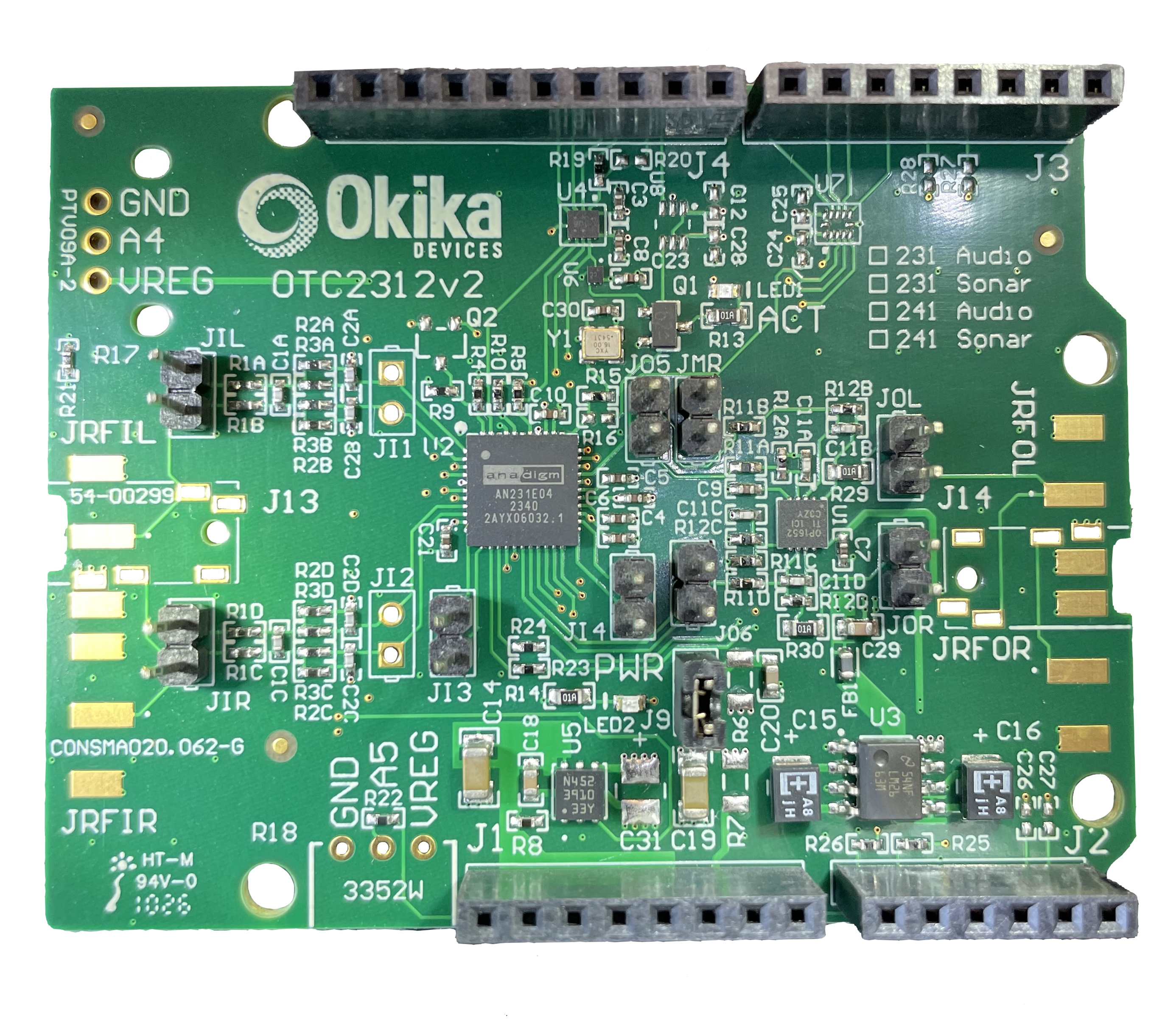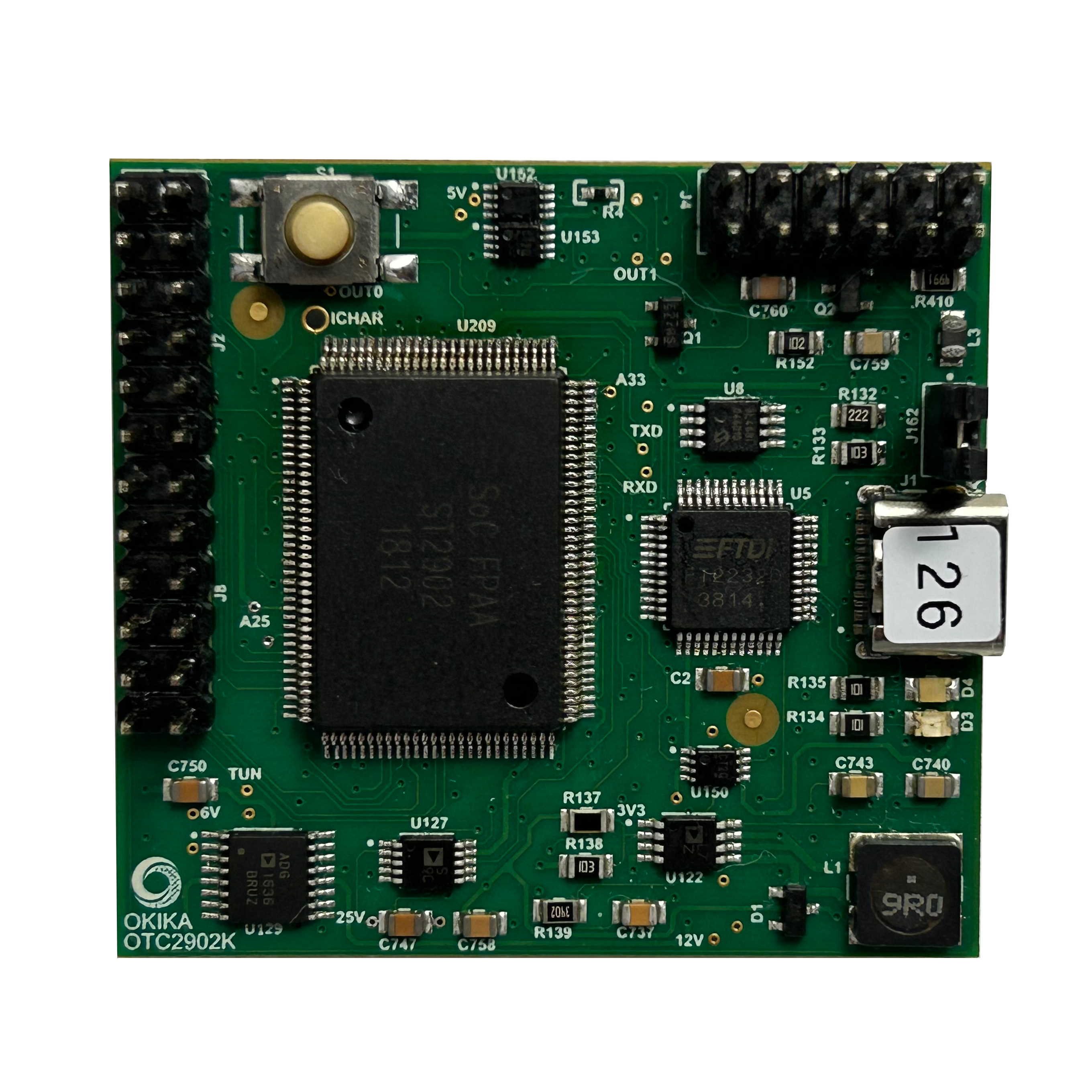

During a recent biomedical instrumentation lab session, a persistent band of 60 Hz interference kept distorting what should have been a clean EKG waveform. The SparkFun AD8232 handled the fundamentals such as amplification, baseline stabilization, and basic filtering, but the familiar power-line hum still broke through the signal. It was a real-world sensing problem that required more flexibility than fixed circuitry could offer.
Professor Gonçalo Fernandes Pereira Martins, Teaching Associate Professor and Chair of Electrical and Computer Engineering at the University of Denver, decided to try a different solution. Instead of adjusting hardware components or redesigning the signal chain, he introduced a reconfigurable analog platform that could adapt instantly in software.
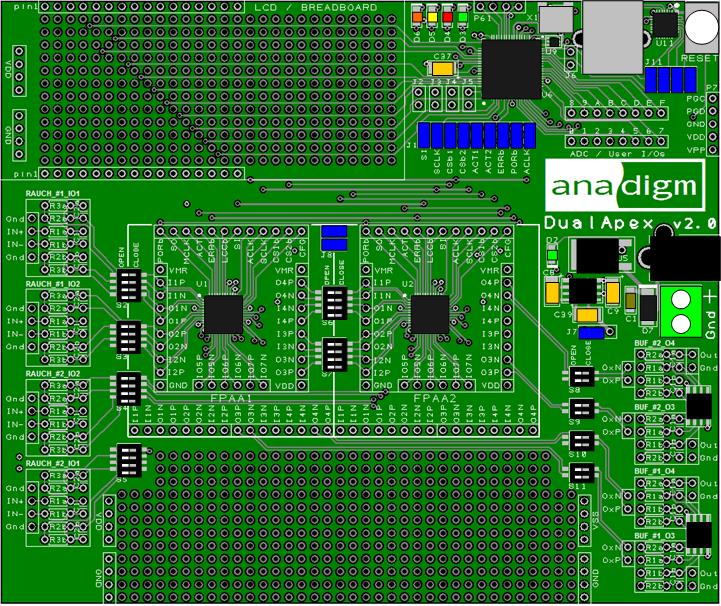
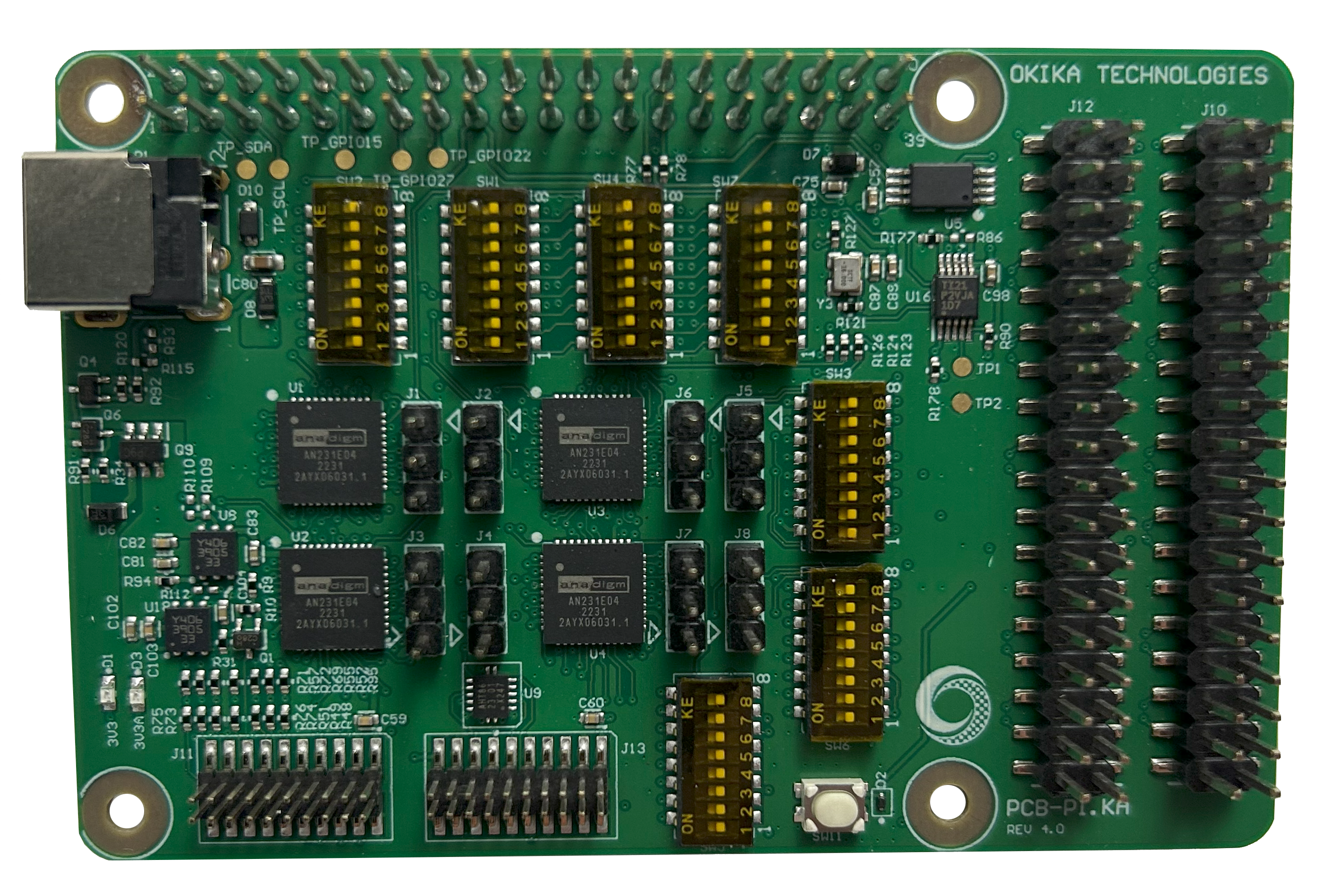
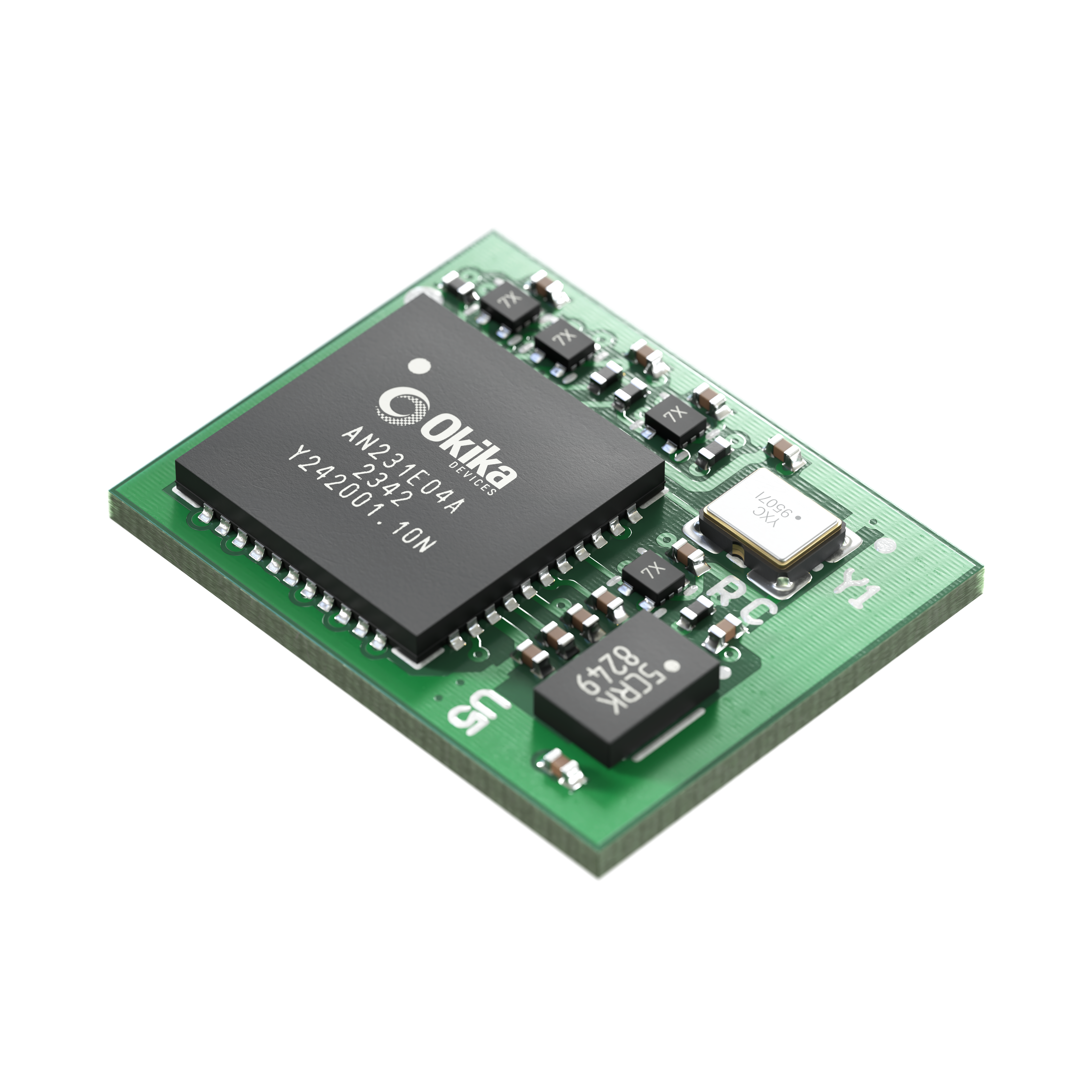
That tool was the Okika Devices FPAA Sing1 FlexAnalog Board. Within minutes, the experiment shifted from troubleshooting to rapid analog system design that could evolve in real time.
Why Reconfigurable Analog Improves EKG and Sensor System Performance
Traditional analog design requires careful component selection, fixed topologies, and multiple hardware revisions. A Field Programmable Analog Array, or FPAA, removes many of these constraints by allowing engineers to build and modify analog signal paths directly in software.
In this study, the work is best understood as two distinct labs, each exploring a different capability of the FPAA:
- Lab 1 focused on improving the EKG signal quality by using the FPAA to add reconfigurable analog filtering and reduce noise that the AD8232 alone could not eliminate.
- Lab 2 focused on extending the system by adding a heart rate detection stage entirely inside the FPAA, showing how new analog functions can be introduced without any hardware changes.
These applications demonstrated how reconfigurable analog can accelerate prototyping and improve signal performance across biomedical and industrial sensing.
Building a Fully Reconfigurable Analog Signal Chain with the FPAA Sing1
One of the strengths of the Okika FPAA Sing1 is its ability to replace a traditionally fixed analog chain with a fully reconfigurable signal path. Instead of committing to discrete circuits for each stage, engineers can place the entire conditioning process inside a single programmable device. This includes:
- Excitation
- Amplification
- Filtering
- Offset correction
Each stage can be tuned or restructured in real time, without touching the PCB or swapping components. This creates an environment ideal for rapid prototyping, experimentation, and instructional labs where students or engineers need to explore different analog behaviors quickly.
Whether the goal is sensor development, biomedical experimentation, or mixed signal research, the FPAA allows users to modify gain, filter shapes, offsets, and even entire analog topologies directly in software. This flexibility removes the friction of traditional analog iteration and shortens the time from concept to working prototype.
Extending the AD8232 EKG Front End Using a Reconfigurable Analog Stage
When paired with devices like the SparkFun AD8232 EKG front end, the FPAA becomes a powerful way to refine and extend the signal chain. The AD8232 provides dependable amplification and baseline filtering, but EKG measurements often encounter 60 Hz mains interference due to long electrode leads, environmental noise, and variations in electrode contact.
Because the AD8232 does not include a built-in 60 Hz notch filter, the FPAA offered a fast, hardware free way to introduce more advanced filtering. Instead of redesigning the board or adding components, Professor Martins used the FPAA to test several notch filter topologies in minutes and observe the results in real time. Once tuned, the FPAA could also be expanded to include new analog functions, such as a heart rate detection stage, all without modifying the hardware.

Using the FPAA to Reduce 60 Hz Interference
Professor Martins used Anadigm Designer 2 to configure the FPAA as a flexible analog processing stage downstream of the AD8232. Because the FPAA is reconfigurable, he could test several filter designs within minutes and see the results immediately.
6th Order Butterworth Band Stop Filter
This approach used three biquad sections and a sample and hold block. At the default clock rate, the design reached the limits of what the device could realize, but lowering the FPAA clock frequency made the filter buildable. Once deployed, it noticeably reduced 60 Hz noise in the live signal.
4th Order Chebyshev Band Stop Filter
Built from two biquads and a sample and hold stage. This alternative required fewer resources and also delivered strong noise reduction. As with the Butterworth configuration, adjusting the FPAA clock frequency allowed the filter to meet the required specifications.
These tests demonstrated one of the FPAA’s core strengths. Instead of designing, ordering, and soldering a new analog stage, the user can try multiple filter topologies in real time and keep only the configuration that performs best.
Adding a Heart Rate Detector with No Hardware Changes
After filtering, Professor Martins extended the system by adding a comparator-based heart rate detector inside the FPAA. With a configurable reference level and differential mode operation, the FPAA generated clean digital pulses for a microcontroller to measure beats per minute.
No PCB changes were needed. No new components were added. The analog chain simply evolved by updating the FPAA configuration file.
This illustrates another major advantage of FPAAs. Engineers can continue building on their design with new analog blocks even after the hardware is assembled.

Why Engineers Should Add an FPAA to Their Analog Design Workflow
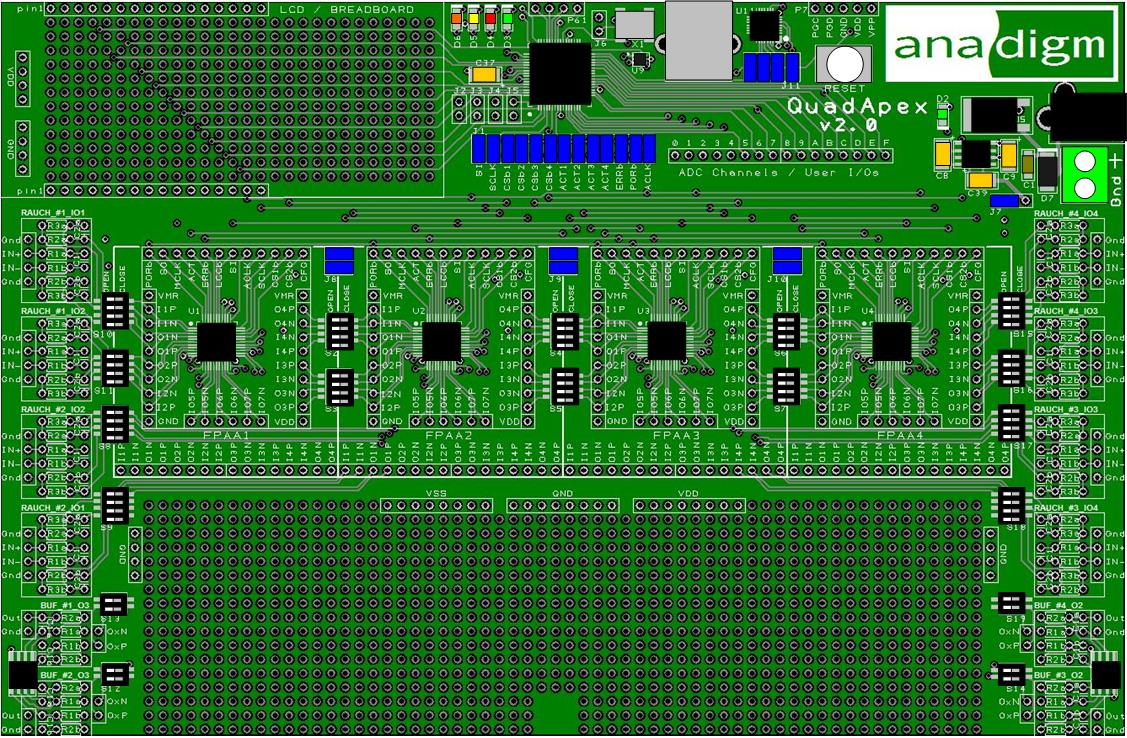
Professor Martins demonstrated that combining the Okika FPAA Quad4 with established analog front ends such as the AD8232 creates new opportunities for high performance sensor design. The FPAA supported rapid filter prototyping, real time tuning, advanced 60 Hz suppression, and the seamless addition of new analog functions without any hardware modifications.
Even when the 60 Hz notch filters consumed a large portion of the FPAA’s internal configurable analog modules, the Quad4 still preserved enough remaining resources to add a comparator based heart rate detector. This demonstrates one of the strengths of reconfigurable analog technology. Engineers can allocate significant FPAA resources to filtering, yet still introduce new analog functions without touching the hardware.
The experiment also showed that multiple FPAAs can be chained together to create larger and more complex analog conditioning pipelines when needed. This provides a scalable path from classroom experiments to advanced biomedical and industrial sensing systems.
Reconfigurable analog allows engineers to shorten development cycles, simplify the bill of materials during prototyping stage, and validate ideas long before committing to a final hardware design. For EKG front ends, wearable medical devices, and precision industrial sensors, the Okika FPAA Quad4 delivers a fast and adaptable platform that improves signal quality and accelerates development.