Modern defense systems are increasingly software-defined. Electronic warfare platforms adapt to changing RF conditions in real time. Autonomous systems process sensor data at the tactical edge. ISR networks collect and analyze large volumes of information across contested environments.
Flexibility is now a key requirement across defense electronics programs.
Much of that flexibility has come from advances in digital hardware and software. FPGAs, AI accelerators, and modular open architectures have changed how quickly new capabilities can be developed, tested, and deployed.
One layer has changed far less than software and digital hardware: the analog signal chain.
Before any signal can be analyzed digitally, it passes through analog circuitry. Filters, amplifiers, detectors, signal-conditioning stages, and RF front ends remain fundamental components of sensing, communications, and electronic warfare systems.
Unlike software, analog hardware has traditionally been difficult to modify after deployment. Performance changes often require redesigning circuit boards, replacing components, or introducing new hardware revisions.
For defense programs with service lives measured in decades, this can create lifecycle risk. As mission requirements evolve, threats change, and components become obsolete, analog hardware may require costly redesign efforts that extend qualification timelines and increase sustainment complexity. The ability to modify analog functionality without replacing hardware can help reduce some of these risks over the life of a system.
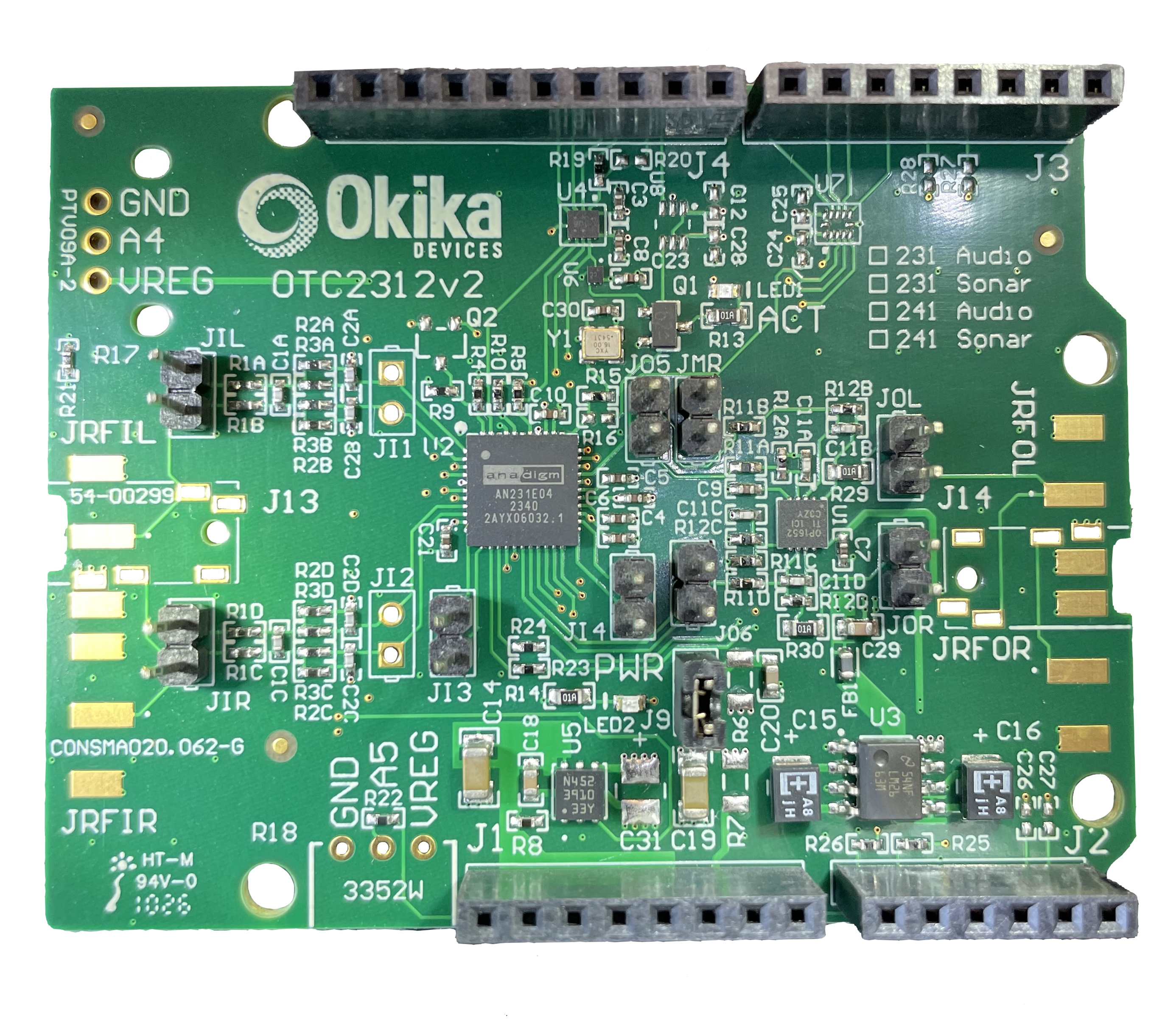
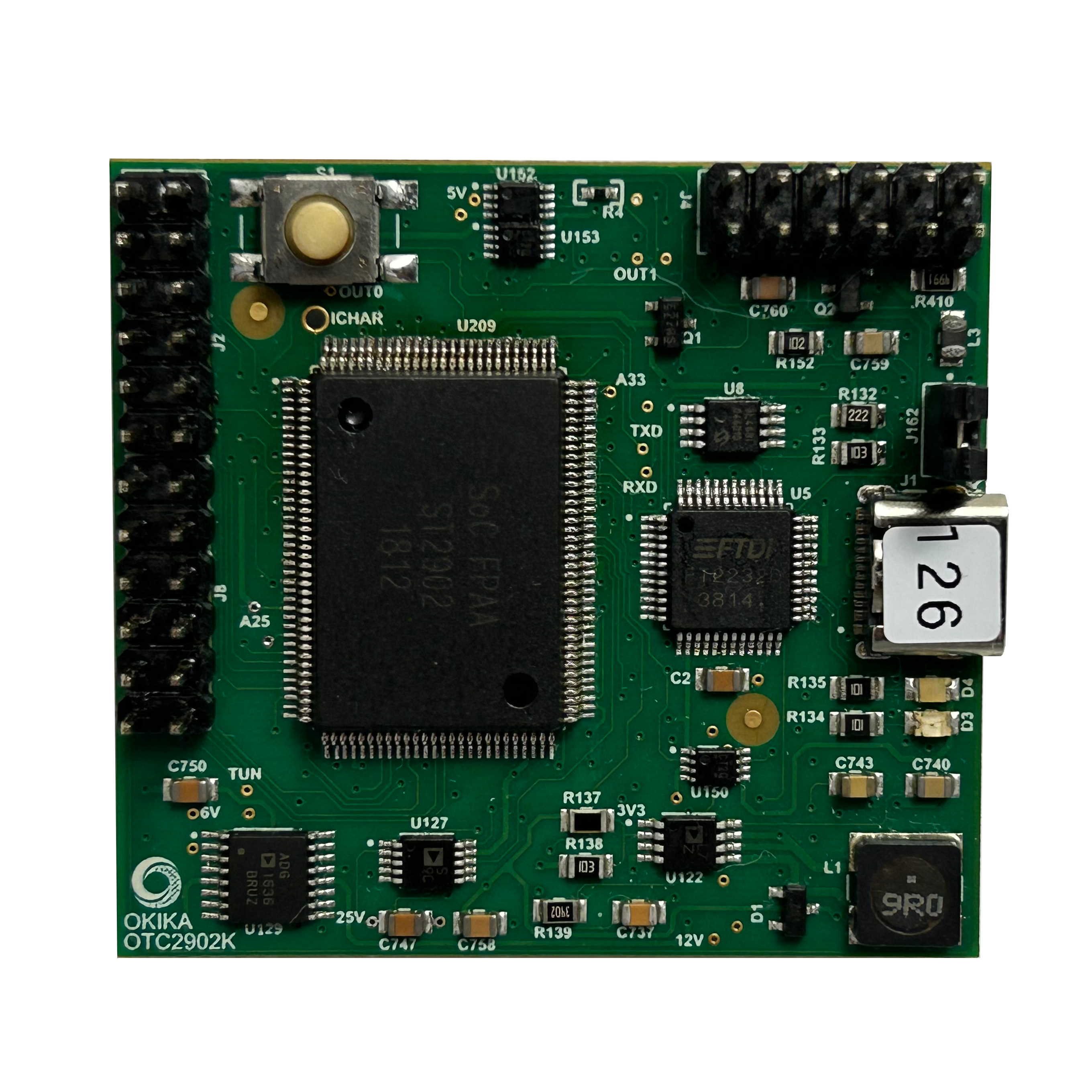
Field Programmable Analog Arrays (FPAAs) are beginning to offer a different approach.
Similar in concept to FPGAs, FPAAs allow analog circuits to be configured and reconfigured through programmable building blocks rather than fixed-function hardware.
Why Analog Flexibility Matters in Modern Defense Systems
Defense electronics operate in environments that change rapidly. Electronic warfare systems encounter shifting RF conditions. Autonomous platforms process data with limited power and bandwidth. Tactical systems face mission requirements that can evolve faster than traditional hardware development cycles.
Digital subsystems have become highly adaptable, but analog front ends often remain fixed.
The result is a gap between adaptable software and fixed analog infrastructure.
Reconfigurable analog hardware offers one approach to reducing that constraint.
Rather than relying on a single-purpose signal chain, engineers can modify filtering characteristics, gain structures, detection thresholds, and sensor interfaces without redesigning the underlying circuitry.
In RF-intensive environments, that flexibility can directly affect operational performance.
Potential FPAA Applications in Electronic Warfare
Electronic warfare environments are becoming more congested and less predictable. Systems must contend with dense spectral activity, deceptive emissions, interference sources, and rapidly changing signals.
Traditional analog front ends are typically optimized for specific operating conditions. That optimization can become a limitation when threat profiles or mission requirements change.
FPAAs make dynamic analog reconfiguration possible at the hardware level.
An FPAA-based design can be configured to adjust:
- Bandwidth
- Filtering characteristics
- Signal conditioning
- Noise rejection
- Detection sensitivity
based on operational requirements.
Performing these functions ahead of digital processing can contribute to reduced latency and lower processing requirements downstream, depending on system architecture and implementation.
FPAA Architecture Tradeoffs: Switched-Capacitor vs Gm-C Designs
It is important to note that FPAA performance and operating limits depend heavily on the underlying analog circuit architecture.
Switched-capacitor FPAA implementations rely on traditional op-amp-based feedback circuits. These designs achieve accurate and repeatable performance by using feedback to reduce sensitivity to process, voltage, and temperature variations. However, their performance is ultimately constrained by op-amp gain and bandwidth limitations as signal frequency increases. For example, as operating frequency approaches a significant fraction of the op-amp’s unity-gain bandwidth, open-loop gain reduction begins to degrade effective closed-loop performance and linearity.
Many modern floating-gate architectures use operational transconductance amplifiers (OTAs) and implement signal paths using Gm-C circuit structures. Instead of relying on strong feedback loops, these systems control gain and behavior primarily through bias currents. This can enable operation at substantially higher frequencies within a given process technology than is typically practical with switched-capacitor implementations. In these architectures, performance is less tightly constrained by feedback stability requirements.
However, this shift introduces a different tradeoff: Gm-C circuits are more sensitive to process, voltage, and temperature variations. As a result, maintaining consistent performance often requires calibration, bias tuning, or adaptive compensation strategies. These techniques are widely used in RF and analog signal processing systems where Gm-C architectures are common.
In practice, this means floating-gate FPAA systems can support more flexible analog processing at higher frequencies, while requiring system-level strategies to manage environmental and manufacturing variability.
As software-defined electronic warfare architectures mature, adaptable analog hardware may provide an additional layer of flexibility within the signal chain.
Low-SWaP Advantages for Edge and Autonomous Systems
Size, weight, and power constraints remain major design challenges across defense platforms.
These constraints are particularly relevant for:
- Unmanned systems
- Distributed sensing nodes
- Mobile electronic warfare platforms
- Space-constrained payloads
- Edge AI devices
Digital processing pipelines can consume substantial power and generate significant thermal load. Certain signal-processing functions can often be executed more efficiently in the analog domain, depending on system design.
Filtering, event detection, continuous monitoring, and feature extraction are examples of tasks that may be performed before data reaches more power-intensive digital processors.
The result can be lower compute overhead, reduced data movement, lower power consumption, and less thermal load.
For autonomous systems operating in denied or resource-constrained environments, these reductions can translate directly into longer operational endurance and improved system efficiency.
FPAAs and the Shift Toward Modular Open Architectures
The defense industry has spent much of the last decade pursuing modular and open architectures intended to shorten development timelines and accelerate capability deployment. Programs increasingly prioritize interoperability, upgradeability, and integration of new technologies without rebuilding entire systems.
Most of this effort has focused on software and digital infrastructure. Open standards and modular computing frameworks have simplified processor upgrades, algorithm deployment, and mission-specific software integration.
The analog layer has often remained outside that cycle of adaptability.
Long-lived defense platforms also face recurring technology-refresh and obsolescence challenges. When analog subsystems are tightly tied to fixed hardware implementations, even modest performance changes can trigger redesign, testing, and recertification activities. Reconfigurable analog platforms do not eliminate these challenges, but they may reduce the frequency and scope of hardware modifications required over a program's lifecycle.
In many systems, analog hardware is still treated as a fixed foundation that requires redesign when mission requirements change significantly. Reconfigurable analog platforms challenge that assumption.
Engineers can modify sensor interfaces, filtering characteristics, and analog processing functions without replacing the underlying hardware. This can support faster prototyping, shorter evaluation cycles, and more flexible mission-specific configurations.
Shorter development cycles place greater value on analog hardware that can be reconfigured instead of redesigned.
Growing Interest in Physical-Domain Computing
Interest in analog and mixed-signal computing has expanded in recent years, particularly in edge AI, neuromorphic computing, and low-power sensing applications.
The driver is practical.
Modern defense systems increasingly require lower-latency processing and reduced power consumption. In some applications, physical-domain computation can execute specialized tasks more efficiently than digital alternatives.
FPAAs provide a platform for evaluating these approaches without requiring custom analog hardware for every design iteration.
Engineers can explore adaptive sensing architectures, low-power signal analysis techniques, and analog preprocessing strategies using reconfigurable hardware rather than developing application-specific circuits from scratch.
Growing interest in edge autonomy, distributed sensing, and low-power computing is likely to sustain attention on these architectures.
Why FPAAs Could Become More Important in Defense Electronics
FPAAs remain a relatively young technology compared to the mature FPGA ecosystem. Development tools, integration workflows, and engineering familiarity continue to evolve.
Despite this, several long-term trends are increasing interest in reconfigurable analog hardware.
Defense platforms are expected to support changing mission requirements, operate in dynamic RF environments, and deliver greater levels of autonomy at the edge. At the same time, size, weight, and power constraints continue to tighten across unmanned systems, distributed sensors, and mobile electronic warfare platforms.
These constraints are driving renewed interest in where adaptability can be introduced within the hardware architecture.
For decades, most system flexibility has been concentrated in software and digital processing. Analog circuitry remained comparatively static even as surrounding systems became more modular and software-defined.
By enabling certain analog functions to be updated, repurposed, or optimized without replacing hardware, FPAAs may help reduce redesign cycles, mitigate some forms of obsolescence risk, and support longer operational relevance for deployed systems.
By reducing the need for board-level redesigns and enabling analog functions to evolve over time, reconfigurable analog hardware may help mitigate some forms of lifecycle and obsolescence risk in long-lived defense programs.
Defense systems are moving toward adaptive architectures, intelligent sensing, and real-time spectrum awareness. In that environment, analog flexibility may become a more significant design consideration than it has been historically.
While FPAAs are unlikely to replace application-specific analog designs in every performance-critical application, they offer an additional tool for balancing performance, flexibility, and lifecycle sustainment. As defense systems remain in service longer while mission requirements continue to evolve, that balance may become increasingly important.
Future advances may depend as much on adaptive sensing and signal conditioning as on gains in digital processing performance.