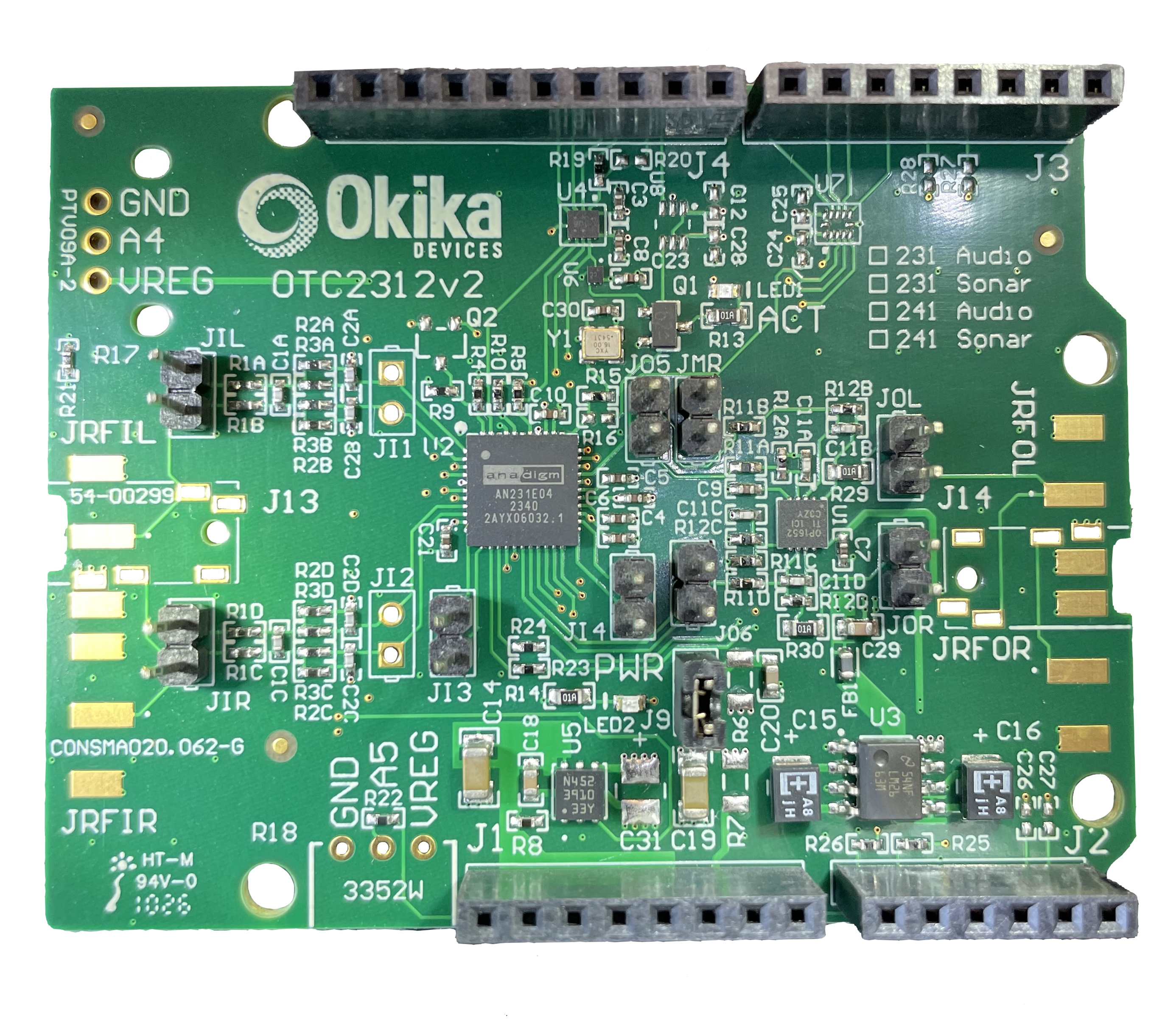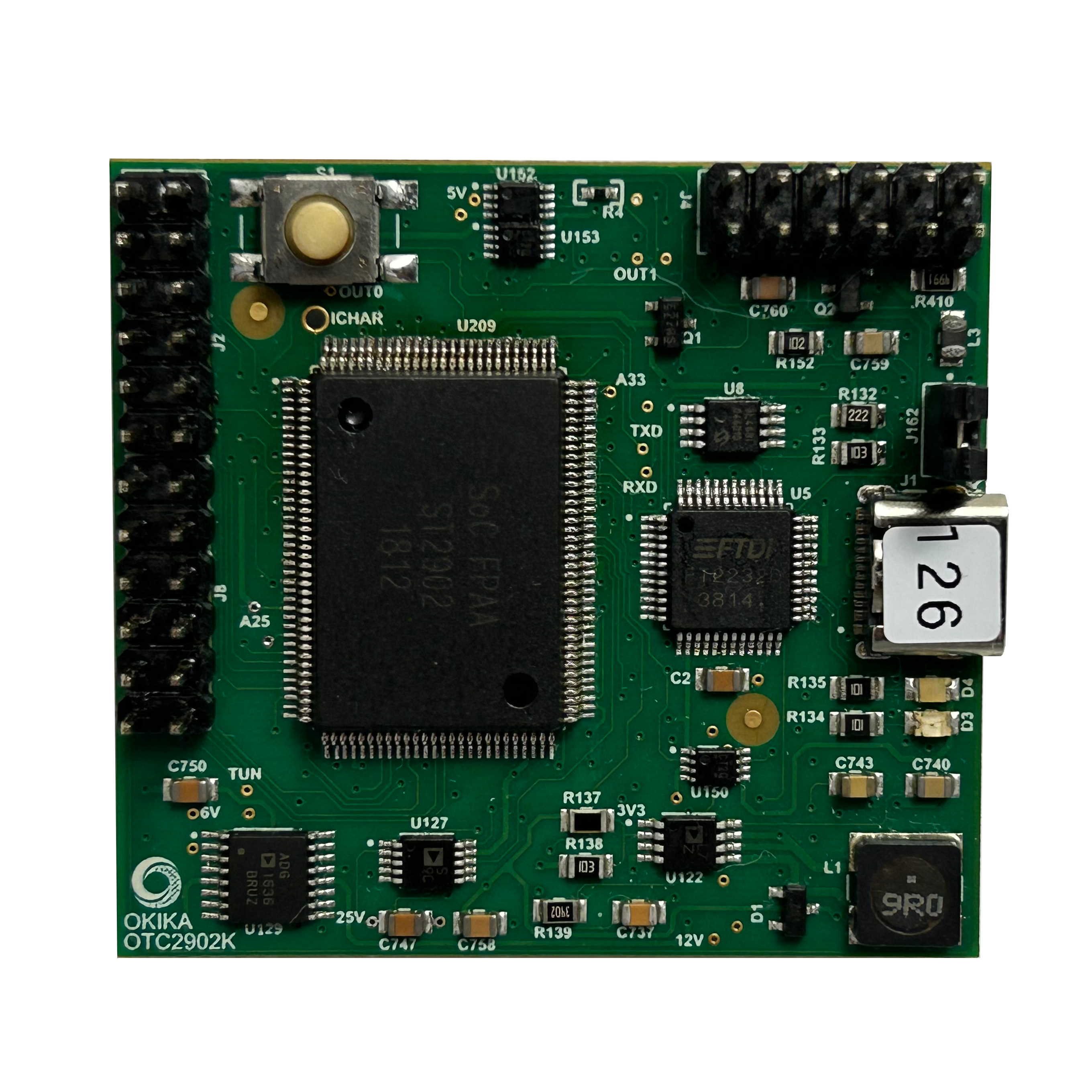
Modern sensing systems depend on the quality of the signal before it reaches the digital domain. Whether the application involves position measurement, industrial monitoring, robotics, aerospace instrumentation, biomedical sensing, or test equipment, the first stages of the signal chain often determine how much useful information the system can recover.
Before a microcontroller, FPGA, DSP, or processor can make decisions, the sensor output must be conditioned. This usually means amplification, filtering, offset adjustment, level shifting, anti-aliasing, and sometimes more advanced analog preprocessing. These functions are handled by the analog front end between the sensor and the analog-to-digital converter, or ADC.
The challenge is that sensor requirements rarely stay fixed.
Signal amplitude may vary across operating conditions. Noise profiles may change from one environment to another. Different customers may need different bandwidths, filter responses, or gain settings. A system designed for one sensor may later need to support another. In traditional analog design, those changes can require new components, PCB revisions, or lengthy redesign cycles.
Field-Programmable Analog Arrays, or FPAAs, offer a different approach.
What an FPAA Adds to a Sensor Interface
An FPAA is a reconfigurable analog device that allows engineers to build and modify analog functions in hardware. Instead of locking the signal chain into a fixed arrangement of op amps, filters, and discrete components, an FPAA provides configurable analog blocks that can be programmed to perform real analog signal conditioning functions.
For sensor interfaces, this means engineers can create a flexible analog front end that can adapt to changing requirements without redesigning the board.
An FPAA can be used to implement functions such as:
- Sensor signal amplification
- Low-pass, high-pass, band-pass, and notch filtering
- Anti-aliasing before the ADC
- Offset and gain adjustment
- Summing, integration, and comparison
- Threshold detection
- Basic analog feature extraction
- Multi-stage analog signal conditioning
This flexibility is especially useful when working with sensors that require tuning during development or calibration after deployment.
Improving ADC Performance with Better Pre-Digitization Conditioning
The ADC can only convert the signal it receives. If the signal entering the ADC is noisy, poorly scaled, distorted, or outside the ideal input range, digital processing may not be able to fully recover the lost information.
A well-designed FPAA-based analog front end can help prepare the signal before digitization. By filtering unwanted noise, scaling the signal to the ADC input range, and shaping the bandwidth around the information of interest, the FPAA helps the digital system work with cleaner, more useful data.
This can improve the overall performance of sensor data acquisition systems by helping engineers:
- Reduce unnecessary noise before conversion
- Prevent aliasing with configurable filter stages
- Match signal amplitude to ADC input requirements
- Improve effective use of ADC resolution
- Reduce the amount of irrelevant data passed downstream
- Adapt front-end behavior to different sensing modes
In many systems, the most efficient place to remove unwanted signal content is before the ADC. Once noise, interference, or unnecessary bandwidth is digitized, the processor must spend additional power and compute cycles handling data that may never be useful.
Reducing Redesign Cycles in Sensor-Based Products
Traditional analog front-end design can be highly effective, but it can also be rigid. A fixed analog front end is usually optimized for a specific sensor, range, bandwidth, and noise environment. When those requirements change, the hardware may need to change with them.
That can slow down development.
An FPAA allows engineers to test and refine analog configurations through software-guided reconfiguration. During prototyping, teams can adjust filter characteristics, gain stages, and signal paths without immediately changing physical components. This makes it easier to compare different front-end architectures and quickly converge on the best design.
For product teams, this can reduce the risk of committing too early to a fixed signal chain. It also creates a path for platform-based design, where a common hardware architecture can support multiple sensor variants or product configurations.
This is valuable for applications where:
- Sensor specifications may change during development
- Different customers require different signal conditioning profiles
- Field calibration is important
- The same board must support multiple sensing ranges
- Long product lifecycles require future adaptability
- Engineering teams want to reduce hardware redesigns
Instead of building a new analog front end for every variation, an FPAA-based approach can help engineers reuse more of the same hardware platform.
Supporting Multi-Sensor and Multi-Mode Systems
Many modern embedded systems are no longer built around a single sensor. They may combine position, pressure, temperature, vibration, current, acoustic, optical, or electromagnetic inputs. Each sensor type may have different signal levels, bandwidths, and conditioning requirements.
A reconfigurable analog front end gives system designers more flexibility when managing those differences.
In a multi-sensor system, an FPAA can help standardize the interface between the physical sensor layer and the digital processing layer. Different analog configurations can be used for different channels, operating modes, or measurement tasks. In some cases, the system can reconfigure the analog front end dynamically based on the active sensing mode.
For example, a system may need one filter profile during startup, another during steady-state operation, and another during diagnostic or calibration mode. With fixed analog hardware, this often requires additional circuitry or design compromises. With an FPAA, the analog behavior can be adjusted more directly.
This makes FPAAs useful for sensor platforms that need to be flexible, compact, and adaptable.
Processing Closer to the Sensor
Digital processing is powerful, but not every task needs to wait until after the ADC. Some signal conditioning and feature extraction tasks can be performed in the analog domain before large amounts of data are generated.
By moving selected signal-facing work closer to the sensor, an FPAA can help reduce the workload on downstream digital components. Instead of digitizing a broad, noisy, or oversampled signal and then extracting useful features later, the system can begin shaping the signal earlier in the chain.
This can be especially important in edge sensing applications where power, latency, and bandwidth are limited.
Analog preprocessing can help systems respond faster by reducing the delay between signal detection and decision-making. It can also reduce the amount of data that needs to be converted, transmitted, stored, or processed. For battery-powered, remote, embedded, or mission-critical sensing systems, those savings can be meaningful.
Where FPAA-Based Sensor Interfaces Create Value
FPAAs are not a replacement for every analog front end, ADC, microcontroller, or FPGA. Instead, they add flexibility to the part of the signal chain where flexibility has traditionally been hardest to achieve: the analog interface between the sensor and the digital system.
FPAA-based sensor interfaces are especially valuable when a design requires:
- Configurable signal conditioning
- Fast prototyping of analog front-end architectures
- Multiple gain or filter settings
- Sensor platform reuse
- Reduced PCB redesigns
- Low-latency preprocessing
- Adaptability across product variants
- Hardware-level analog behavior that can be updated over time
This makes them relevant across a wide range of applications, including industrial sensing, precision measurement, aerospace and defense systems, robotics, embedded instrumentation, biomedical devices, and research platforms.
A More Flexible Path for Sensor Signal Chains
As sensing systems become more capable, the analog front end becomes more important, not less. Better digital processing does not eliminate the need for clean, well-conditioned sensor signals. It increases the value of preparing those signals correctly before they reach the ADC.
FPAAs give engineers a practical way to build sensor interfaces that are both hardware-based and reconfigurable. They make it possible to adjust analog behavior, experiment with signal-chain architectures, and support changing requirements without starting from scratch each time.
For teams building advanced sensor systems, programmable analog can shorten development cycles, improve platform flexibility, and help move useful signal processing closer to the source.
Okika Devices’ FPAA technology gives engineers a flexible foundation for designing, testing, and deploying reconfigurable analog front ends for modern sensor interfaces. Whether the goal is faster prototyping, cleaner ADC input signals, or a more adaptable sensing platform, FPAAs provide a powerful bridge between the physical world and digital intelligence.