The vestibular system supports balance, spatial orientation, and gaze stabilization. When it is damaged by injury or disease, patients often experience dizziness, instability, and loss of coordination.
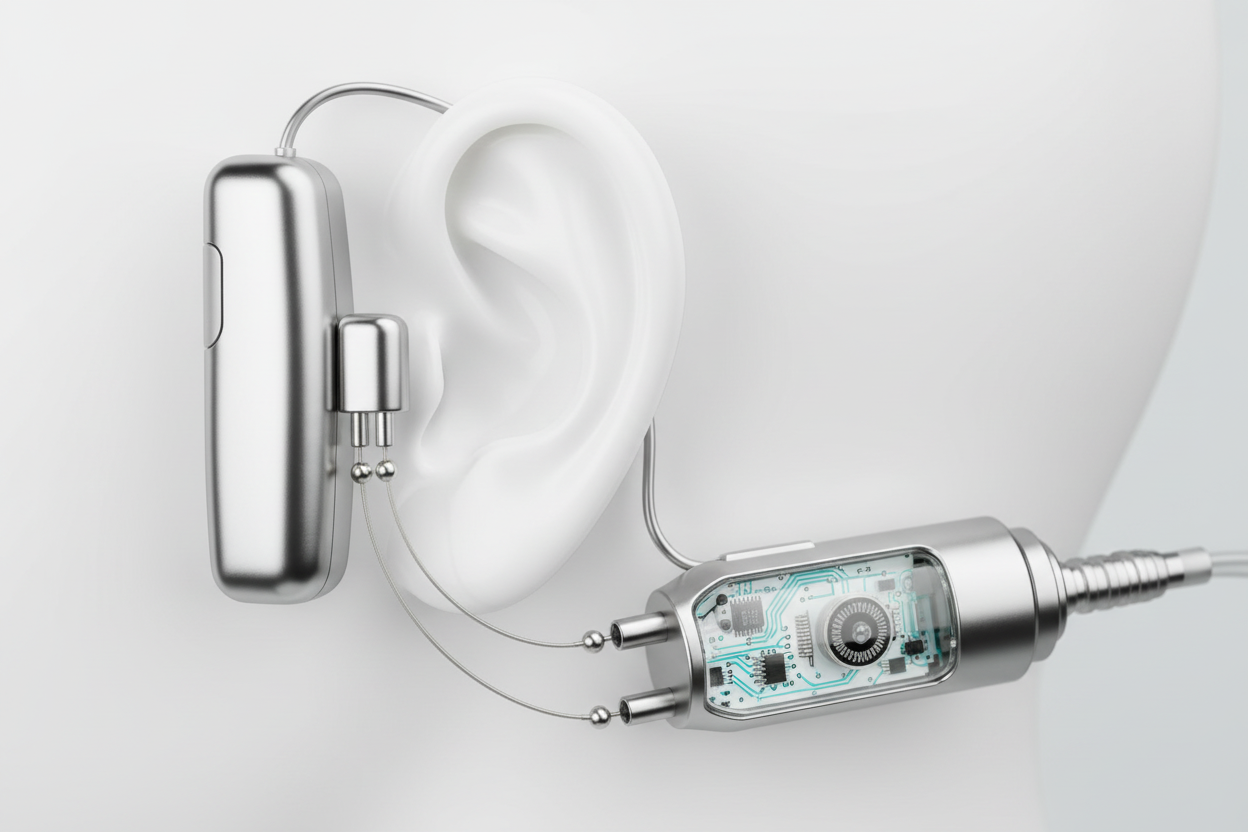
Vestibular prostheses aim to replace this lost function using motion sensing and neural stimulation. The engineering challenge is persistent: continuous sensing, real-time processing, and stimulation must all run within a very tight power budget.
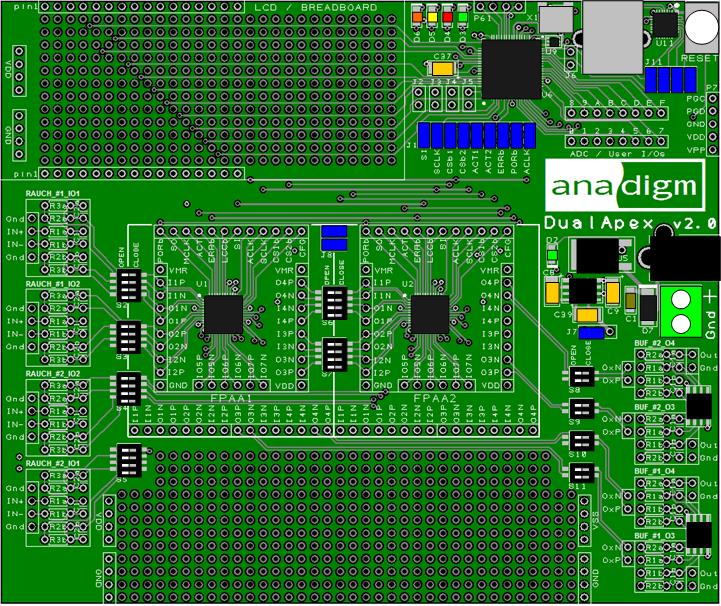
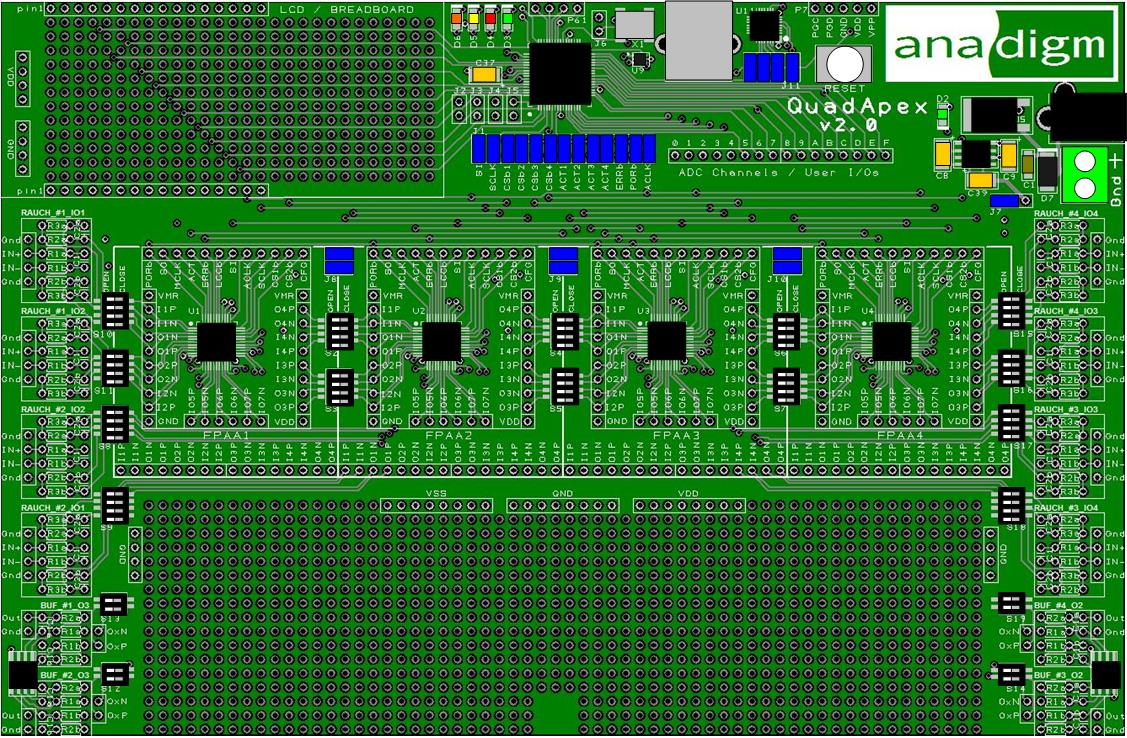
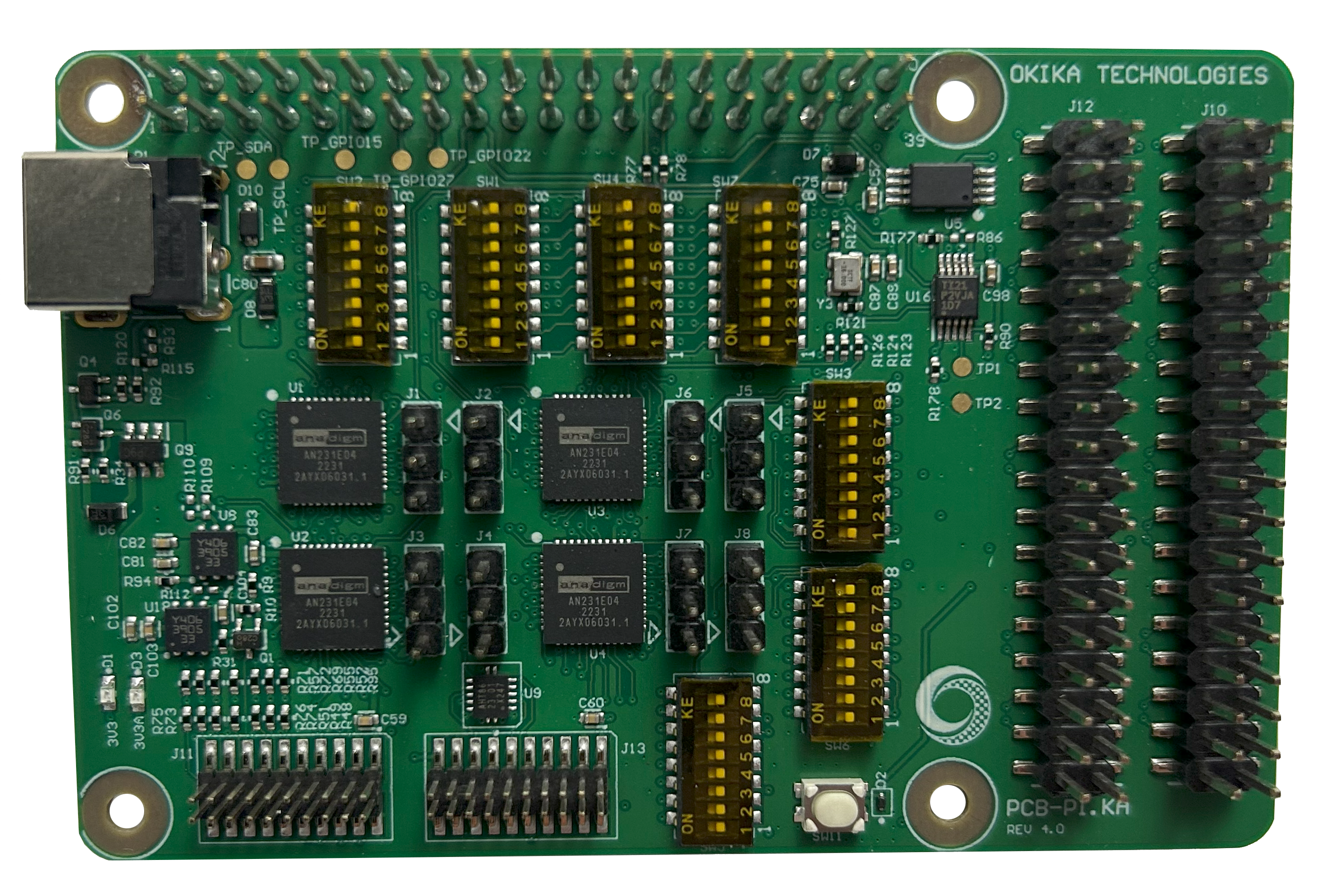
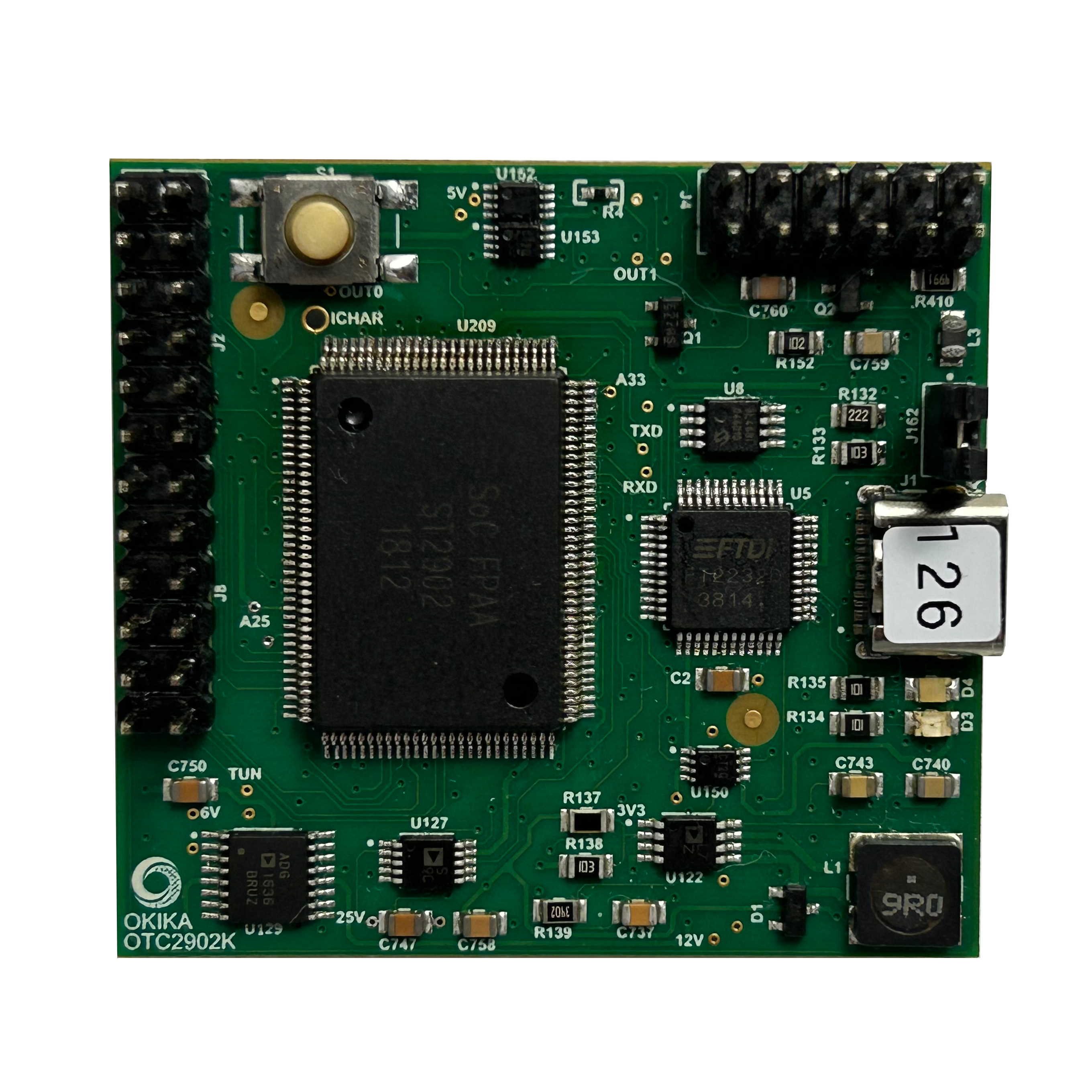
A collaboration between Dr. Hakan Töreyin (San Diego State University, Smart Health Institute) and Georgia Tech explored a different implementation path. The work uses a Field Programmable Analog Array (FPAA) to implement vestibular signal processing in the analog domain.
Head motion is converted directly into neural stimulation signals using reconfigurable analog circuits. This removes the need for a traditional digital processing pipeline.
Why Vestibular Prostheses Require Signal Processing
The vestibular system relies on semicircular canals to detect angular head rotation. These sensors convert motion into neural firing patterns that support balance and orientation.
When these structures fail, that encoding breaks down. Prostheses attempt to reconstruct it through electronic means.
A typical system must:
- Measure head motion using inertial sensors
- Process angular velocity signals
- Generate neural stimulation patterns
- Deliver controlled electrical pulses to vestibular nerves
The difficulty is not sensing alone. The challenge is reproducing nonlinear neural encoding while staying within implantable power limits.
Why FPAA Fits Implantable Neural Systems
Digital signal processing offers flexibility, but power consumption becomes a constraint in implantable use cases.
The FPAA approach replaces software-based computation with configurable analog hardware. Signal processing is implemented directly in circuit behavior rather than instruction execution.
The platform includes filters, amplifiers, current mirrors, timing blocks, and neural encoding elements. Floating-gate storage provides long-term programmability at the hardware level.
Key advantages include:
- Continuous operation at very low power
- No ADC/DSP pipeline overhead
- Compact implantable form factor
- Tunable neural encoding behavior
- Reconfigurable stimulation strategies
- Rapid iteration during development
Vestibular prostheses remain an active research area. The ability to retune behavior without redesigning hardware is a practical advantage.
FPAA Vestibular Signal Processing Architecture
The system converts gyroscope output into biphasic stimulation pulses through an analog processing chain.
Three stages are used:
Gyroscope signals first pass through a voltage-to-current conversion stage. This produces proportional analog currents. These currents are then mapped into frequency through a nonlinear conversion block. The final stage generates biphasic stimulation pulses for neural activation.
The full chain runs continuously in analog hardware.
Biomimetic Encoding of Angular Velocity
Biological vestibular neurons respond to angular velocity with nonlinear firing rates. The FPAA system reproduces this behavior through a nonlinear mapping stage.
The response follows a saturating curve similar to a hyperbolic tangent profile. This reflects reduced sensitivity at higher motion amplitudes, consistent with biological behavior.
Instead of numerical approximation, the implementation uses floating-gate transconductance amplifiers. In subthreshold operation, these devices naturally produce the required nonlinear transfer response.
No digital computation is required for this mapping.
Configurable Control of Stimulation Behavior
Programmable current mirrors provide adjustment of stimulation parameters.
These controls affect:
- Baseline firing frequency
- Motion sensitivity
- Angular velocity scaling
- Output dynamic range
Parameters are stored in floating-gate memory. This allows tuning after fabrication.
For prosthesis development, this removes the need for hardware redesign during parameter optimization.
Biphasic Neural Stimulation Generation
Neural stimulation requires charge balancing to prevent tissue damage.
The system generates biphasic pulses with alternating polarities. Each pulse includes configurable width, interphase delay, and frequency control.
An external H-bridge circuit drives the neural interface. The FPAA controls timing and waveform structure.
This ensures stable charge-balanced stimulation over continuous operation.
Real-Time Vestibular Encoding Performance
The system was evaluated using a commercial gyroscope mounted on a precision rate table.
Angular motion was successfully converted into stimulation frequencies between approximately 50 Hz and 350 Hz. Output remained stable across varying motion profiles.
Biphasic stimulation generation also remained consistent under continuous operation. Timing parameters stayed within expected bounds during dynamic input changes.
Ultra-Low Power Operation
Power consumption is a key constraint in implantable prosthetic systems.
The FPAA-based processor operates at an estimated power level below 20 µW with on-chip bias generation.
This is achieved through weak-inversion operation in analog circuitry. Computation occurs continuously without clocked processing or sampling overhead.
Compared to conventional digital implementations, the reduction in power is significant for long-term implantation scenarios.
Why Reconfigurability Matters
Vestibular prosthesis design is not fixed. Optimal stimulation varies across patients and conditions.
Key parameters often require adjustment:
- Encoding curves
- Baseline firing rate
- Sensitivity thresholds
- Spatial tuning behavior
FPAA hardware supports post-fabrication tuning. This allows iterative refinement without redesigning circuits.
Toward Multi-Channel Vestibular Systems
The vestibular system operates across multiple semicircular canals. Each canal contributes to full spatial motion sensing.
Future systems can extend this architecture to multi-axis implementations. This would improve motion resolution and encoding fidelity.
Additional strategies such as adaptive gain control and piecewise-linear encoding are also feasible within FPAA frameworks.
The same hardware platform supports exploration of these approaches without structural changes.
Toward Practical Implantable Vestibular Prostheses
This work shows how analog reconfigurable hardware can support vestibular prosthesis design under strict power constraints.
Signal processing and neural encoding are implemented directly in hardware. This removes the need for continuous digital computation.
For vestibular prostheses and related neural interfaces, the result is a system that combines low power consumption with adjustable behavior.
As clinical requirements evolve, FPAA-based systems provide a way to adjust encoding strategies without redesigning the underlying hardware.