
By Jarrod Eliason, Director of Engineering, Okika Technologies
Based on pioneering research from Dr. Jennifer Hasler, Georgia Tech
From Software-Defined Radios to Software-Defined Everything
Embedded computing has been transformed by the rise of software-defined architecture. We’ve moved from fixed-function designs to programmable logic, adaptive processing, and reconfigurable payloads. FPGAs enabled digital flexibility, allowing systems to evolve after deployment, and set the foundation for software-defined radios, radars, and payloads.
Yet one frontier has remained largely untouched: the analog domain. Every embedded system, no matter how “smart” its digital fabric, still begins and ends with fixed analog circuitry. Those filters, amplifiers, and sensor interfaces define the limits of performance long before any digital logic takes over.
What if those analog elements could be programmed too?
The Rise of the SoC FPAA
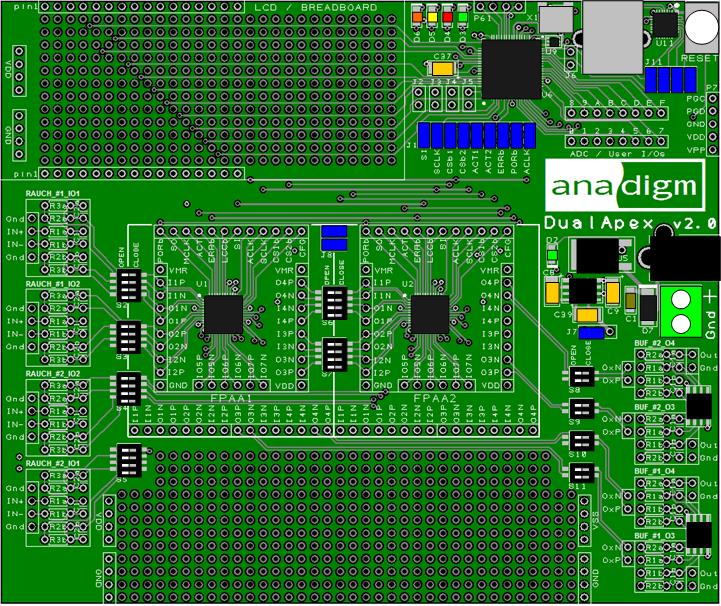
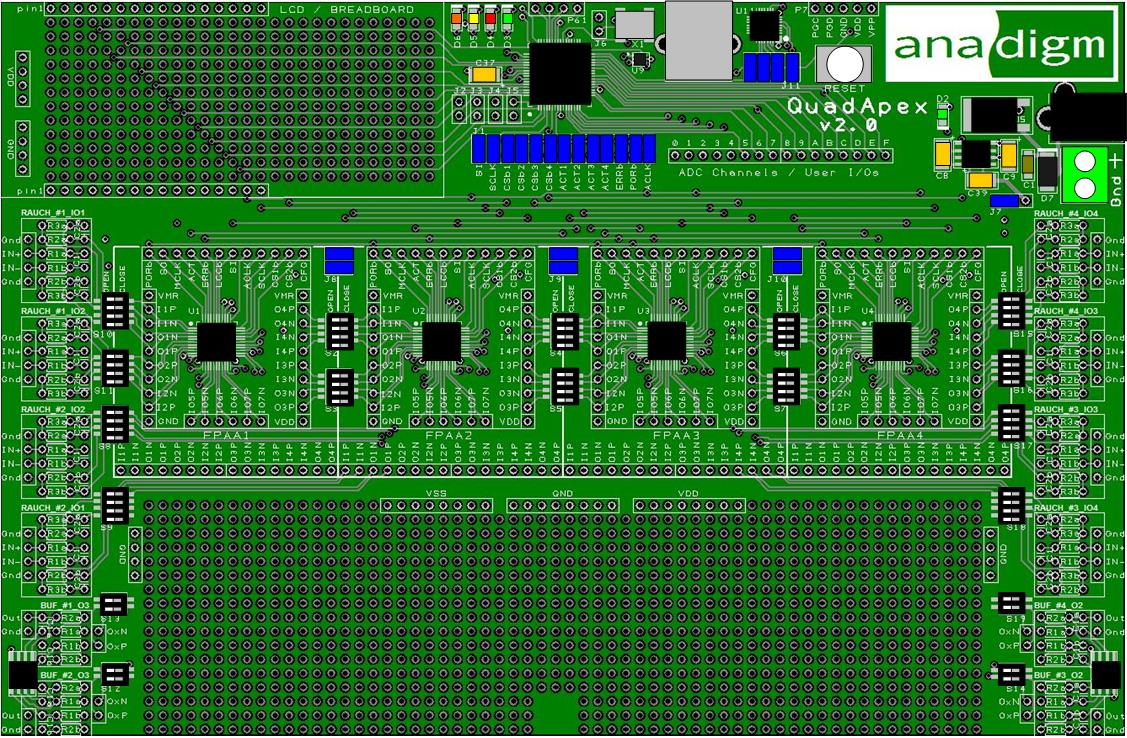
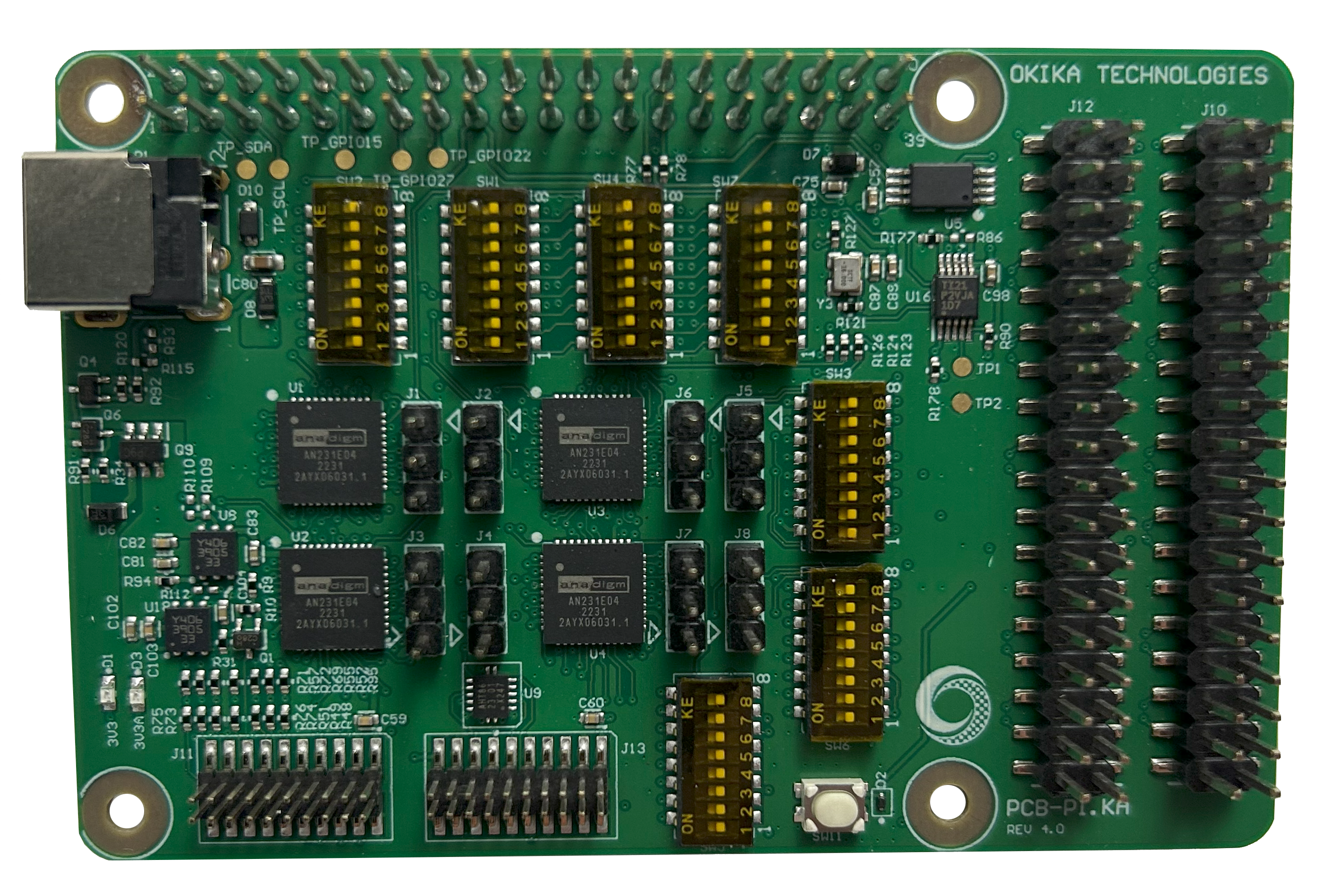
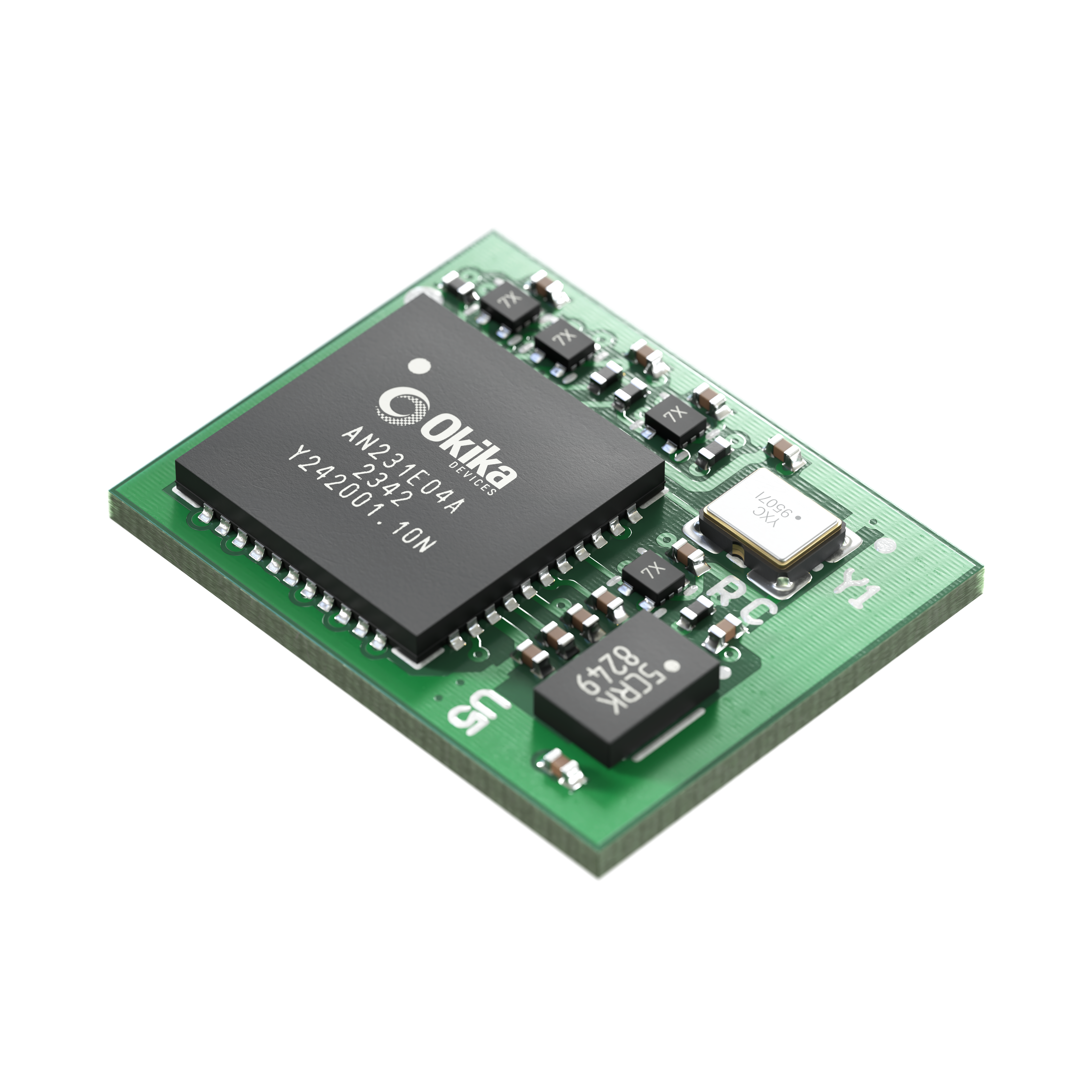
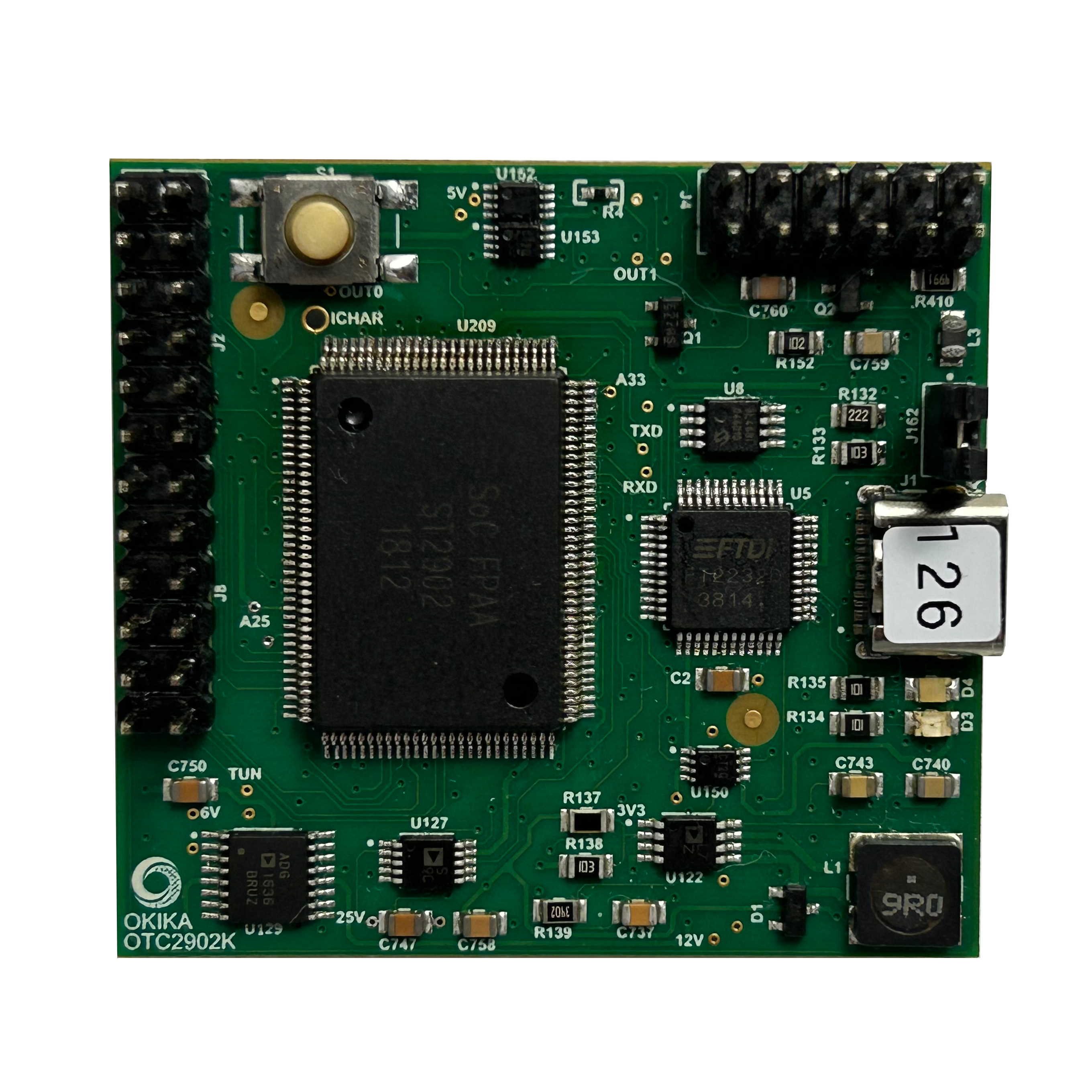
That’s the promise of the System-on-Chip Field Programmable Analog Array (SoC FPAA), an innovation driven by Dr. Jennifer Hasler and her team at Georgia Tech. The SoC FPAA combines reconfigurable analog blocks, embedded digital control, and on-chip computation in a single, unified mixed-signal fabric.
In simple terms, it does for analog design what FPGAs did for digital design, but with one critical twist: the analog computations consume orders of magnitude less power.
Using a graphical or software-based design tool chain, engineers can rapidly configure analog signal paths, adaptive filters, sensor front ends, or neural network primitives, all at runtime and without external components. The result is a software-defined analog platform that complements and extends software-defined digital systems.
Knobs You Didn’t Know Existed
FPAAs introduce an entirely new class of system flexibility, what Dr. Hasler describes as “giving engineers knobs they didn’t know existed.”
In traditional systems, those “knobs”, cutoff frequency, gain, bias, impedance, or nonlinear response, are set in silicon. With SoC FPAAs, they become software-adjustable parameters. This opens remarkable possibilities:
- Adaptive front ends that can change their characteristics in mission, shifting from wideband to narrowband sensing modes on command.
- Self-tuning instrumentation where analog filters and amplifiers adjust dynamically to changing environmental or mission conditions.
- Ultra-low-power neuromorphic computation directly in the analog domain, enabling local learning and inference at microwatt levels.
For embedded designers, this translates into systems that can evolve without new boards or components, faster prototyping, lower weight and power, and new mission adaptability.
Software-Defined Payloads and Instrumentation
The most immediate impact of SoC FPAA technology will be in software-defined payloads and software-defined instrumentation, two domains long constrained by static analog hardware.
- Software-Defined Payloads: In aerospace or defense systems, analog front ends for RF sensing, radar, or telemetry can be reconfigured in orbit or in flight. A single SoC FPAA-based board can replace multiple analog front ends, reducing size, weight, and cost while expanding mission flexibility.
- Software-Defined Instrumentation: In embedded test and measurement, a single FPAA-based system could shift in seconds between acting as an oscilloscope front end, a lock-in amplifier, or a precision filter bank — simply by uploading a new configuration.
The broader implication: hardware-defined limits become software-defined opportunities.
Embedded Computing Meets Analog Programmability
For readers of Embedded Computing Design or attendees at the Embedded Systems Conference, the SoC FPAA represents a natural evolution of the “programmable everything” trend.
Software-defined systems have already merged computer and reconfigurable logic; the next convergence is analog and digital co-design. The SoC FPAA’s on-chip integration allows analog signal processing to coexist with embedded digital logic, microcontrollers, and nonvolatile configuration, a true mixed-signal system-on-chip.
This opens a path to software-defined mixed-signal computing, where developers can:
- Move processing closer to the sensor to minimize data movement and power.
- Dynamically reconfigure sensing and processing pipelines.
- Implement analog machine learning primitives that complement digital AI at the edge.
It’s not a replacement for digital — it’s an expansion of the embedded computing toolbox.
A New Design Ecosystem
As with any transformative technology, success will depend on how the ecosystem engages. The FPAA doesn’t fit neatly into existing analog or digital silos. It touches both, and demands collaboration among system architects, embedded toolchain vendors, and mission sponsors.
FPAA-based designs are being used by defense, aerospace, and edge-AI sectors to surpass traditional digital limits. But to scale, the technology needs champions, engineers and integrators willing to explore new workflows, new standards, and new possibilities.
As Jarrod at Okika Technologies puts it:
“We’re not redefining just the circuit. We’re redefining what it means to be software-defined.”
The Analog Renaissance
In a sense, the SoC FPAA heralds a renaissance for analog computing, one built not on fixed circuits, but on programmable, adaptive, and intelligent hardware. Just as FPGAs opened the door to digital reconfigurability, SoC FPAAs opened the door to analog intelligence at the edge.
For embedded designers, this means more control, more adaptability, and more opportunity to innovate across domains that were once walled off by hardware boundaries.
The knobs are there. It’s time to start turning them.
About the Author
Jarrod, Director of Engineering at Okika Technology, is focused on bringing Dr. Jennifer Hasler’s SoC FPAA technology from research to deployed systems. The company works with defense, aerospace, and embedded industry partners to develop programmable analog platforms for software-defined payloads, instrumentation, and edge AI.