
Precision analog filter modules from 10 Hz to 100 kHz simplify high-order lowpass implementation for signal conditioning and data acquisition systems
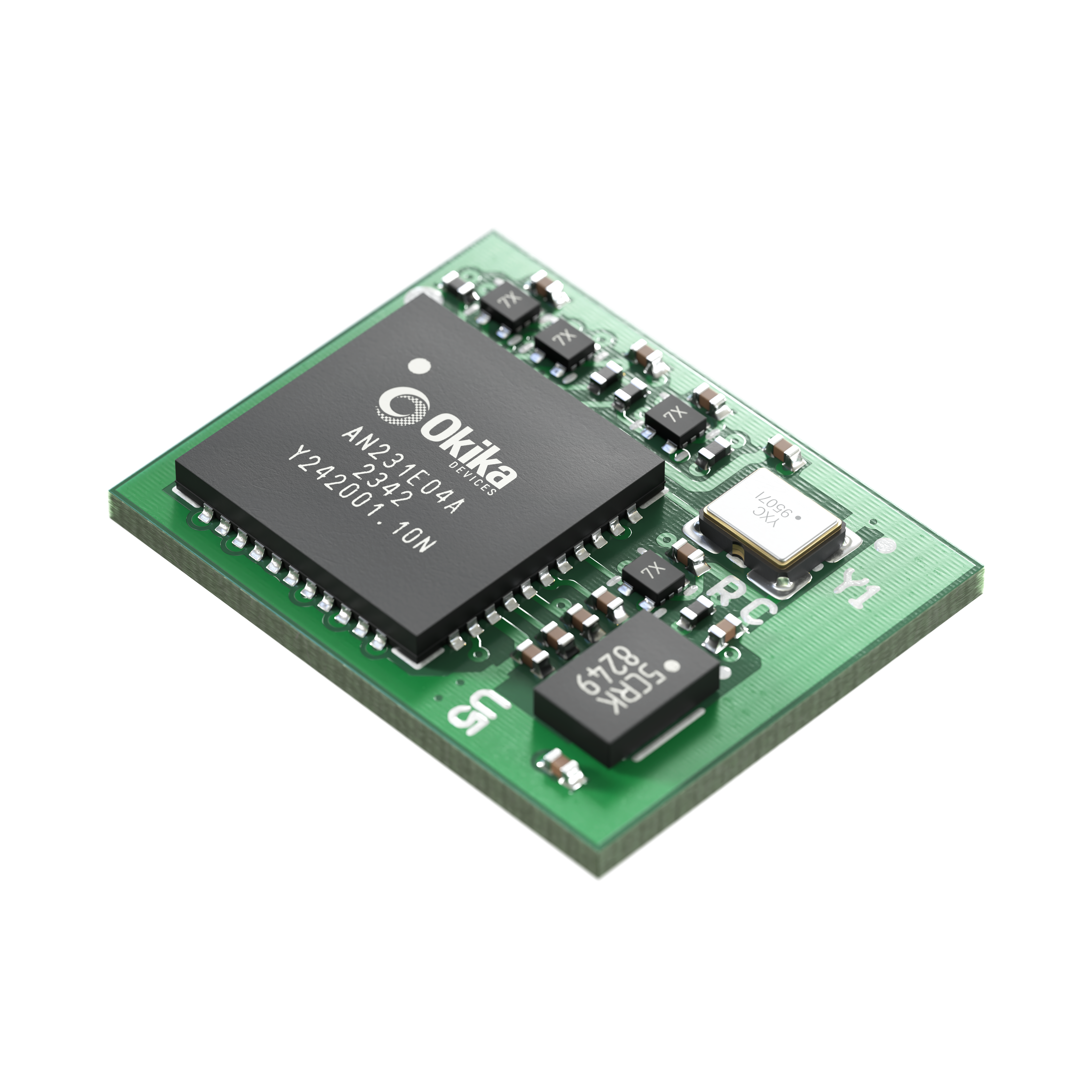
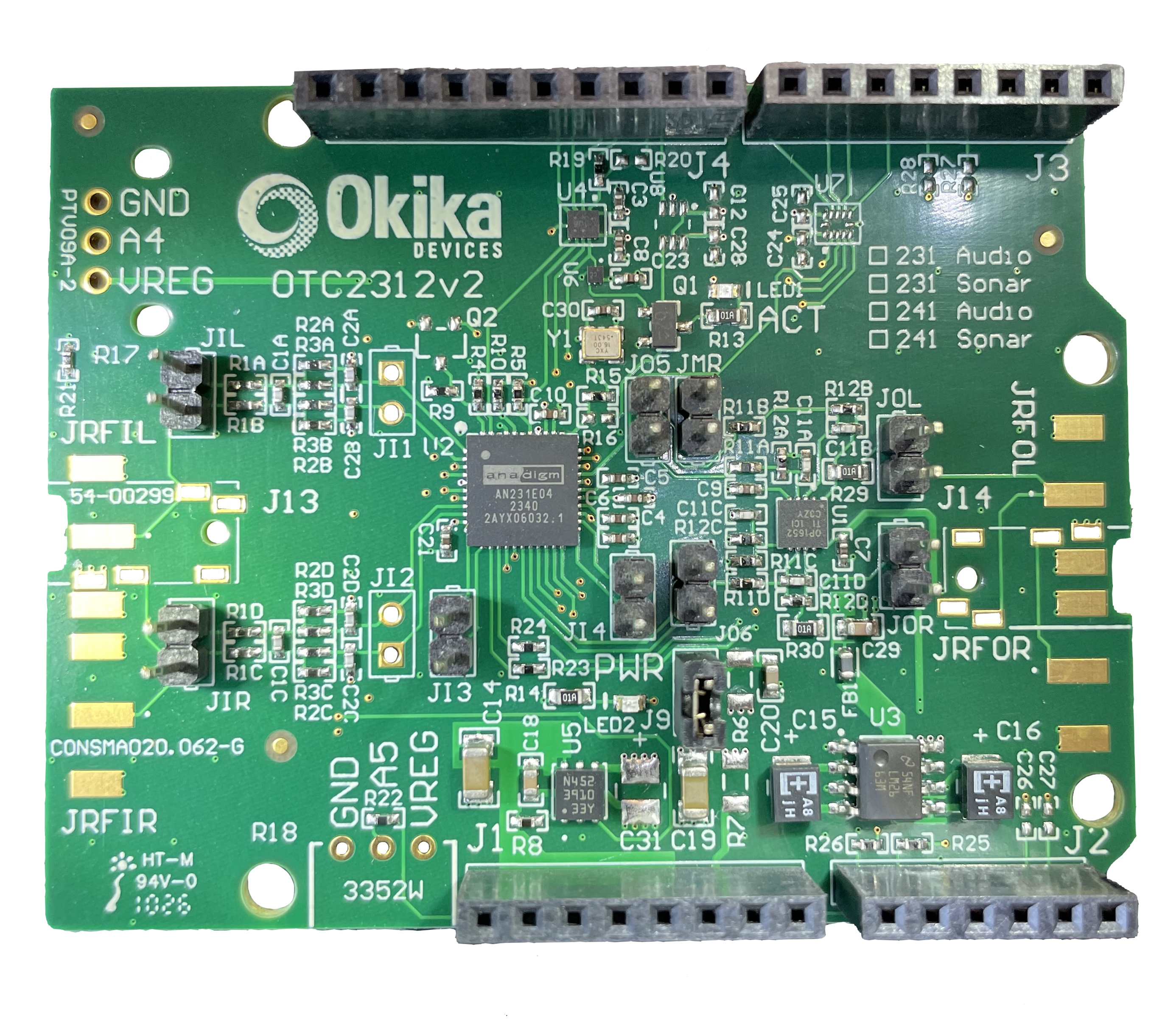
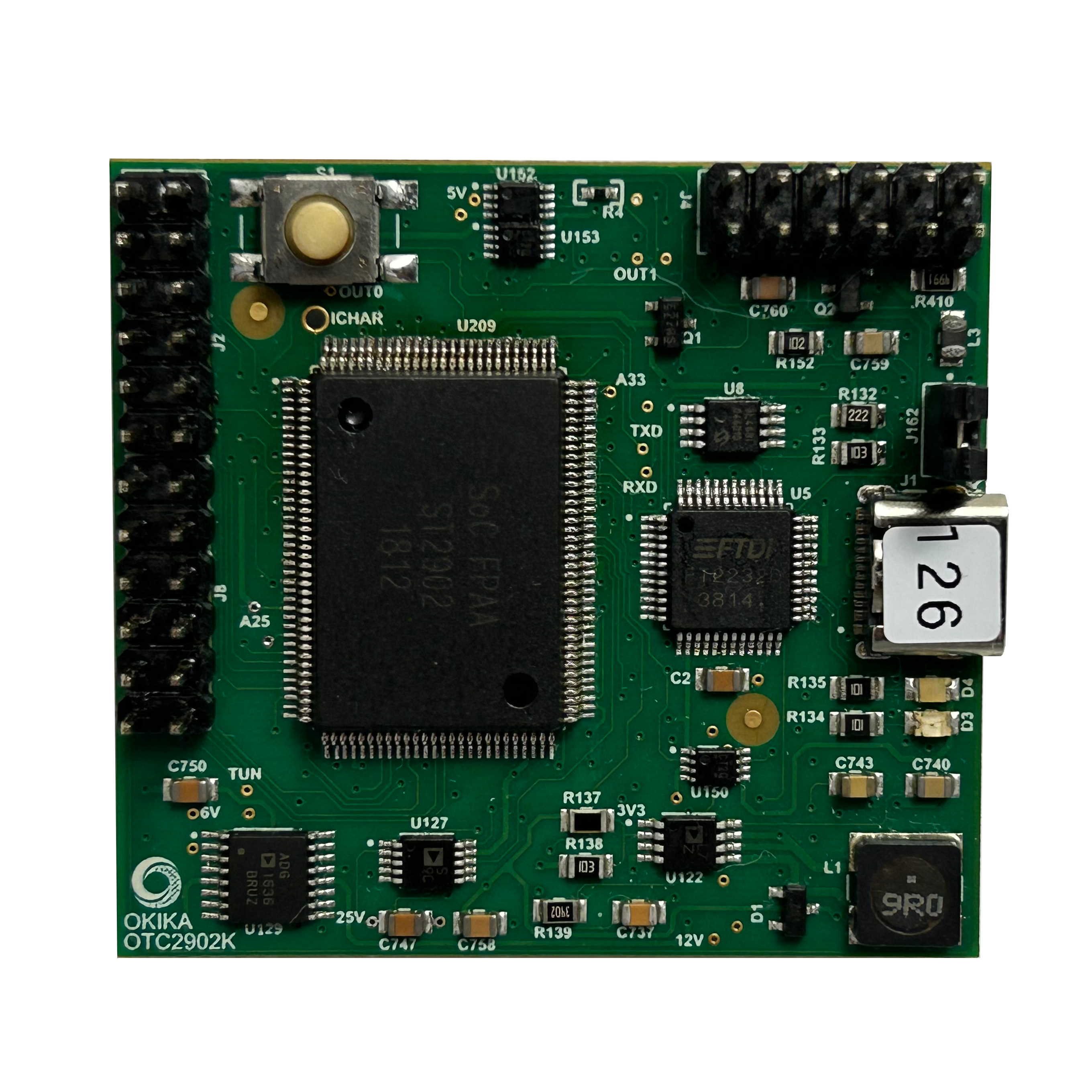
Colorado Springs, CO - February 23, 2026 — Okika Devices today announced the introduction of 6 lowpass filter modules in the Chameleon™ family. Built on Okika’s FlexAnalogTM FPAA technology, the OTC931xL devices are pre-programmed lowpass filter modules engineered for demanding analog signal conditioning applications.
This series of the Chameleon™ products, unveiled at DesignCon, spans cutoff frequencies from 10 Hz to 100 kHz, providing engineers with a compact, deployment-ready solution for implementing steep, maximally flat lowpass filtering without the complexity of discrete multi-stage designs.
Addressing High-Order Filter Design Challenges
High-order active filters remain essential in modern mixed-signal systems particularly for anti-aliasing ahead of high-resolution ADCs and for signal conditioning in precision measurement environments. However, designing stable 8th-order filters using discrete components introduces design risk, board space penalties, and tuning overhead.
The Chameleon™ modules integrate a precision-tuned 8th-order Butterworth response into a standardized module format, enabling:
- Maximally flat passband characteristics
- Steep roll-off for improved out-of-band rejection
- Consistent, repeatable frequency performance
- Reduced design iteration and integration time
By abstracting filter synthesis and stability considerations into a pre-engineered module, Okika Devices allows design teams to focus on overall system architecture rather than multi-stage analog optimization.
Broad Frequency Coverage for Diverse Applications
The product line includes cutoff options beginning at 10 Hz for low-frequency sensor and biomedical instrumentation systems, extending through mid-band frequencies for audio and acoustic processing, and reaching 100 kHz for high-speed data acquisition and ADC anti-aliasing applications.
This wide frequency range supports use across:
- Sensor signal conditioning systems
- Industrial automation and process control
- Custom analog front ends
- Programmable active filter networks
- Research and prototyping platforms
Typical lowpass applications include:
- Anti-aliasing filters for ADC inputs
- Sensor noise reduction and bandwidth control
- Audio and baseband signal processing
- Biomedical instrumentation filtering
- Data acquisition and test equipment
- Post-DAC reconstruction and smoothing
Designed for Integration in Modern Mixed-Signal Systems
As system architectures increasingly combine precision analog front ends with high-performance converters, filter performance directly impacts signal integrity and measurement accuracy.
Chameleon™ modules provide a scalable, high-order filtering solution that supports:
- Improved aliasing suppression
- Controlled bandwidth definition
- Cleaner DAC output reconstruction
- Faster prototype-to-production transition
The modular approach also enables design reuse across product families, reducing engineering effort while maintaining analog performance standards.
Availability
The Chameleon™8th Order Butterworth Lowpass Filter family will be available in multiple cutoff frequencies from 10 Hz to 100 kHz beginning March 1, 2026.
Engineers attending DesignCon are invited to visit the Okika Devices at booth 407 for technical demonstrations and application discussions with the company’s engineering team.