As modern systems demand lower power consumption, tighter integration, and shorter development cycles, selecting the right analog signal processing strategy is becoming more important for engineering teams. Many designers compare two pathways: traditional Analog Front-End (AFE) ICs or a reconfigurable Field Programmable Analog Array (FPAA). AFEs remain essential in many sensing and mixed-signal applications. FPAAs offer a level of flexibility that can dramatically speed up both prototyping and product evolution.
This article explains where each approach fits, how they differ, and the scenarios where a reconfigurable FPAA architecture becomes the more strategic choice.
What Sets FPAA and AFE ICs Apart
Analog Front-End ICs
AFE ICs are application-specific components designed to condition and preprocess analog signals. They often include programmable gain amplifiers, filters, ADC drivers, and sensor focused signal paths. Their main advantages are predictable behavior, low noise, and strong performance in well-established applications such as biomedical sensing, industrial monitoring, and optical measurement.
The main limitation is rigidity. Once an AFE is selected, the available signal chain and architecture are fixed.
Field Programmable Analog Arrays
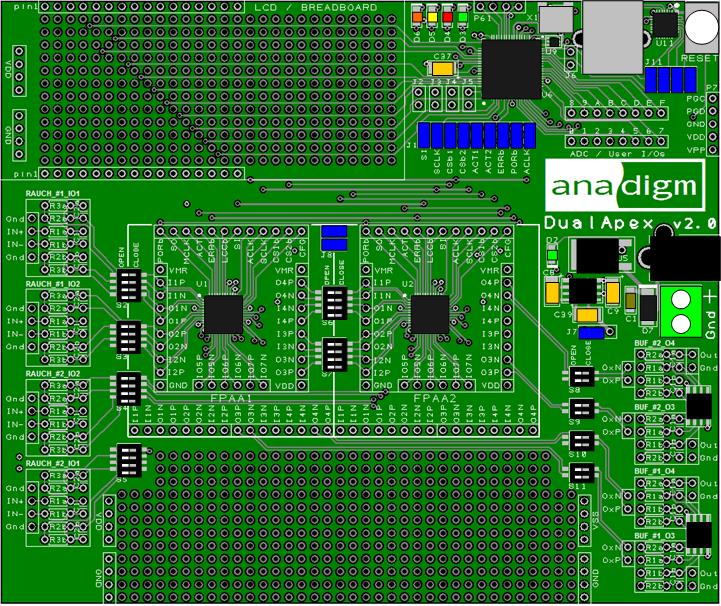
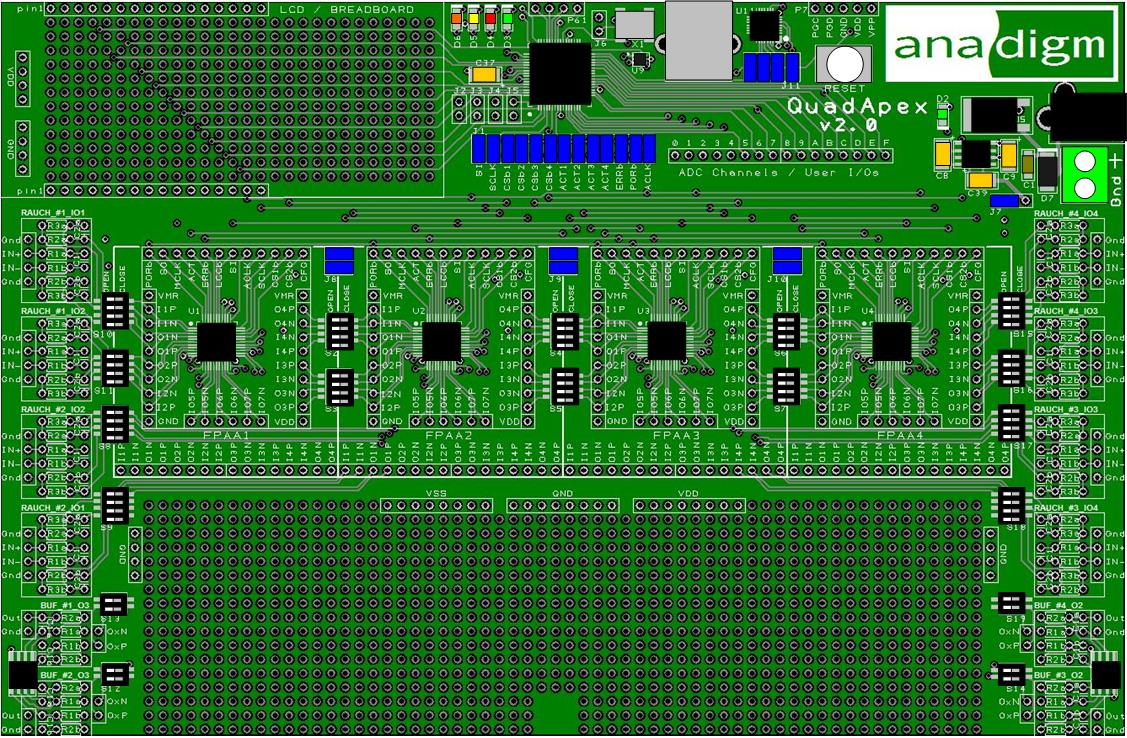
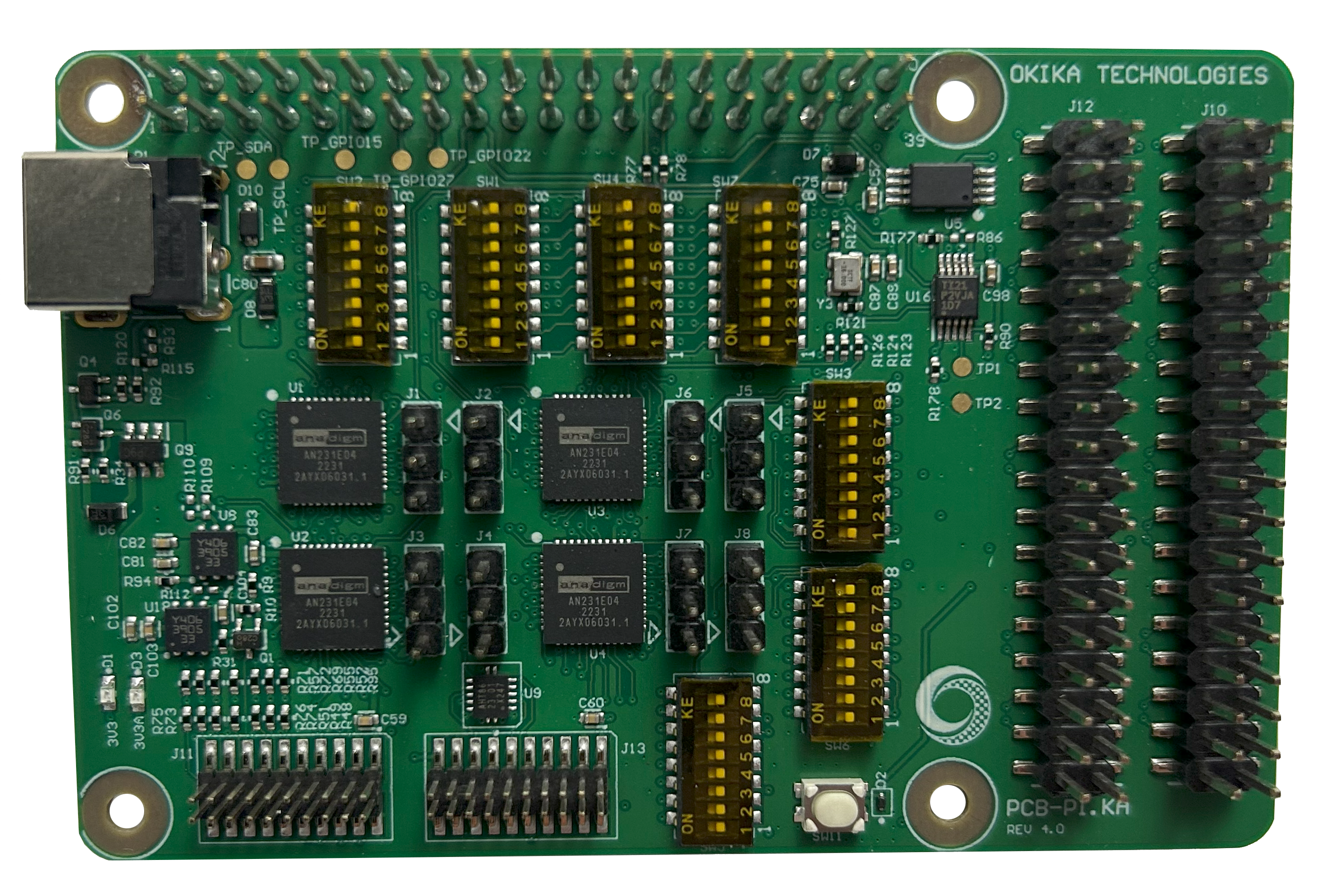
FPAAs bring reconfigurable logic to the analog domain through networks of configurable analog blocks. These blocks allow designers to build and modify analog signal chains directly in hardware. Common functions such as filters, amplifiers, peak detectors, integrators, and control loops can be created, tuned, and reconfigured without new board spins or custom silicon.
The key strength of an FPAA is adaptability, both during development and after deployment.
Where FPAAs Provide a Real Advantage
Reconfigurable analog unlocks development speed and flexibility that traditional AFEs cannot match.
Rapid Prototyping and Experimentation
An FPAA allows engineers to test ideas without committing to a fixed analog front end. Filter topologies, gain arrangements, adaptive elements, and novel architectures can be explored in minutes rather than weeks. Early stage product exploration, research settings, and algorithm heavy workloads benefit significantly from this ability to experiment quickly.
Flexibility Over the Product Lifetime
A key advantage of reconfigurable analog is that the hardware can evolve long after the device ships. Configuration updates can introduce new analog behaviors, support new sensors, or adapt to changes in operating conditions. For IoT, industrial systems, and long life infrastructure, this flexibility can extend product lifespan without redesigning the hardware.
Consolidation of Discrete Analog Components
Many analog signal chains rely on clusters of discrete components. An FPAA can often recreate these functions internally, which simplifies the board layout, reduces component count, and limits supply chain complexity. For small form factor systems, this consolidation can be a major advantage.
Analog Computation That Saves Power
Performing part of the signal processing in the analog domain before the ADC can greatly reduce digital load. Systems that rely on batteries or remote power sources benefit from this reduction in computation and data transmission.
When an FPAA Is the Right Choice
An FPAA becomes a strategic option when the design is expected to evolve or when the architecture is still being explored. It is particularly valuable in systems that combine traditional analog conditioning with algorithmic or adaptive behavior. It also supports product lines where multiple variants can be built on a shared hardware platform.
In environments that require fast iteration, such as academic research, sensor development, or concept validation, an FPAA significantly reduces development time and complexity. Teams that anticipate changes in sensor choices, environmental conditions, or market requirements may also find that a reconfigurable approach provides a more resilient long term architecture.
When an AFE is Still the Right Choice
An AFE remains the better option when:
- The architecture is stable and not expected to change
- You need the lowest possible input noise and highest precision
- You are designing for large scale production with rigid requirements
- A sensor already has an industry standard AFE designed around its characteristics
Final Thoughts
The choice between an Analog Front-End IC and a Field Programmable Analog Array depends on development speed, future flexibility, performance requirements, and product strategy. AFEs deliver strong, predictable performance for mature applications. FPAAs offer unmatched adaptability for teams that value rapid iteration, configurable processing, and long-term system evolution.
As more industries adopt reconfigurable analog for sensing, automation, and algorithm-driven systems, engineers are finding that flexibility at the front end often leads to faster innovation and longer product lifetimes.
If you are exploring how FPAAs can accelerate your analog development or simplify your signal chain, our team can help you evaluate the best path forward.