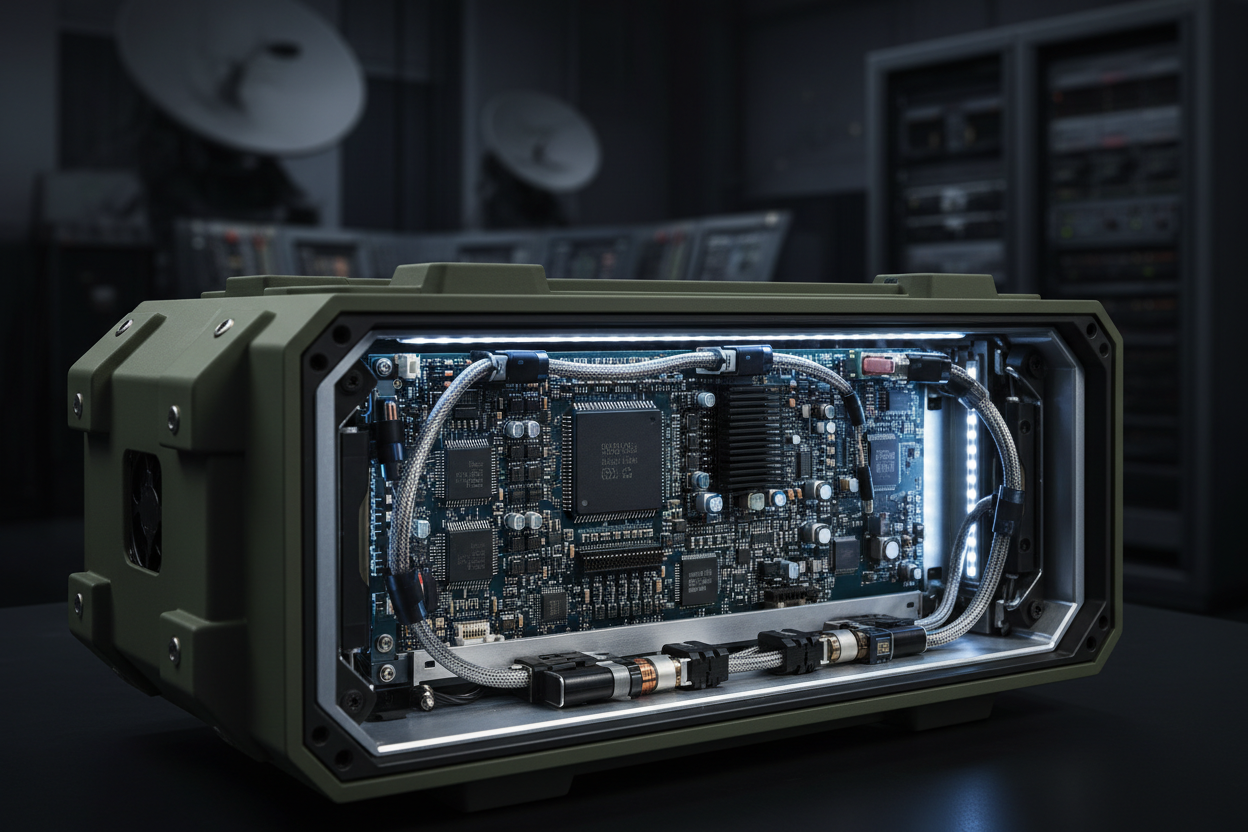
Autonomous robotic platforms are often discussed in terms of software, sensors, navigation algorithms, and onboard compute. Those layers are important, but they do not tell the whole story. Every robotic system still depends on a physical control loop: a sensor detects a condition, electronics interpret the signal, and an actuator responds.
For remotely piloted vehicles, unmanned ground systems, aerial drones, maritime platforms, and robotic subsystems, the quality of that control loop can determine how well the system performs under stress. A few milliseconds of delay may not matter in a slow supervisory function. In motor control, stabilization, vibration suppression, or safety-limit enforcement, it can matter a great deal.
That is why latency in robotic control systems is more than a data-processing issue. It is a system-performance issue.
The Limits of Fully Digital Control Loops
Many robotic control systems use a familiar signal chain. A sensor produces an analog signal. The signal is conditioned, converted through an analog-to-digital converter, processed by a digital controller, and then translated back into an actuation command.
This architecture is familiar, flexible, and well understood. It also introduces unavoidable tradeoffs.
Sampling takes time. Scheduling takes time. Digital processing takes time. Memory movement, clocked logic, and interface overhead all add complexity. Even when the average delay is acceptable, jitter can still become a problem in fast control loops.
A control system does not only need to respond quickly. It needs to respond predictably.
In real-time robotic control, that distinction matters. A stabilization loop, motor-control circuit, or propulsion-control subsystem may not be able to wait for every signal to move through a complete digital pipeline before useful action begins.
How FPAAs Support Low-Latency Robotic Control
Field Programmable Analog Arrays, or FPAAs, bring programmability into the analog domain. Instead of forcing every sensor signal through an ADC before useful work can begin, an FPAA can perform selected signal-processing and control functions closer to the sensor itself.
These functions may include filtering, amplification, signal conditioning, threshold detection, waveform shaping, and control-loop support. For time-sensitive robotic systems, that changes the design conversation.
The point is not that every robotic function should remain analog. Higher-level autonomy, planning, mapping, communications, and mission logic still belong in digital processing environments. FPGAs, microcontrollers, processors, and AI accelerators all have important roles to play.
The question is whether every signal needs to travel through the full digital pipeline before the system can react.
For many robotic control functions, the answer is no.
Continuous-Time Processing in the Control Loop
FPAAs are especially useful for control functions that benefit from continuous-time behavior. Unlike software-controlled systems that execute instructions in sequence, analog processing can respond directly to the signal as it changes.
That makes Field Programmable Analog Arrays relevant for local control functions where timing, feedback behavior, and predictability matter.
A stabilization loop may need to respond continuously to motion, vibration, load, or position changes. A motor-control subsystem may need fast analog-domain feedback before a higher-level controller updates its next command. A propulsion system may need immediate signal conditioning and response behavior while the digital system handles mission-level decisions.
In each case, the FPAA can support a faster layer of local control.
Robotic Applications for FPAA-Based Control
FPAA robotic control systems are especially relevant when a platform needs low-latency response without adding unnecessary digital overhead.
Motor Control and Propulsion Control
Motor and propulsion systems depend on fast feedback. An FPAA can support analog-domain signal conditioning and local control behavior, helping the system respond to changes in load, current, position, or operating condition before the digital controller handles broader coordination.
Stabilization Systems
Stabilization is one of the clearest examples of where real-time response matters. Whether the platform is airborne, ground-based, maritime, or attached to a moving subsystem, stabilization requires fast and predictable control-loop behavior. FPAA-based analog processing can help reduce the delay between sensor input and corrective response.
Vibration Suppression
Robotic platforms often operate in vibration-heavy environments. Motors, uneven terrain, rotating components, and external shock can all introduce noise into the system. FPAAs can help process vibration-related signals closer to the source, reducing the burden on downstream digital electronics.
Power Management
Power behavior is critical in small unmanned systems and SWaP-constrained platforms. FPAAs can support local signal processing for power-monitoring and response functions, helping the system react to changing load conditions with less dependence on high-power digital processing.
Safety Limits and Performance Envelope Protection
Some responses should not wait for high-level software intervention. Safety-limit enforcement and performance-envelope protection can benefit from local reflex behavior at the sensor and control layer. An FPAA can help support these protective functions in a programmable analog architecture.
Reducing Digital Overhead in Fast Robotic Control Loops
Low latency is only one part of the value. FPAAs can also help reduce the digital workload required for selected real-time control functions.
ADCs, high-speed digital interfaces, clocked logic, and supporting memory structures all consume power. They also add board-level design considerations, thermal burden, and possible failure points. In fast robotic control loops, unnecessary digital overhead can affect response behavior, endurance, reliability, and mission flexibility.
By handling selected functions in the analog domain, an FPAA can reduce the amount of data that needs to be digitized, moved, and processed before local control action can begin. That gives the digital system more room to focus on higher-level autonomy, communications, and coordination.
Where FPAAs Fit in a Robotic Control Architecture
FPAAs do not replace the full digital control stack. A better way to think about them is as a complementary layer.
The FPAA handles selected analog-domain functions that benefit from continuous-time behavior. The digital system handles planning, coordination, communications, logging, and complex algorithms.
In an autonomous platform, that division of labor can be valuable. The digital system remains responsible for strategic intelligence. The FPAA provides fast local responsiveness where the physical system needs it most.
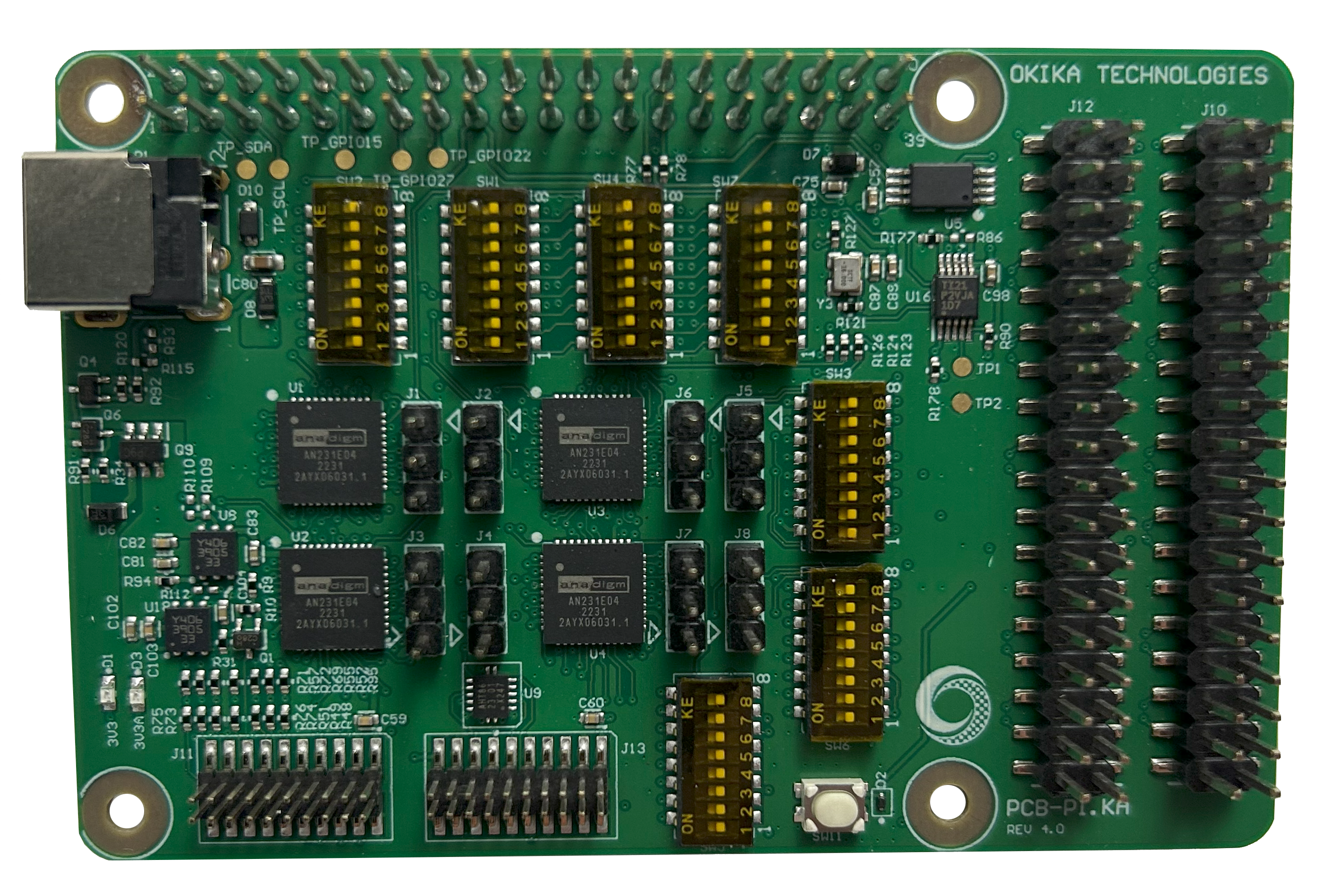
Okika FPAA Platforms for Robotic Control Systems
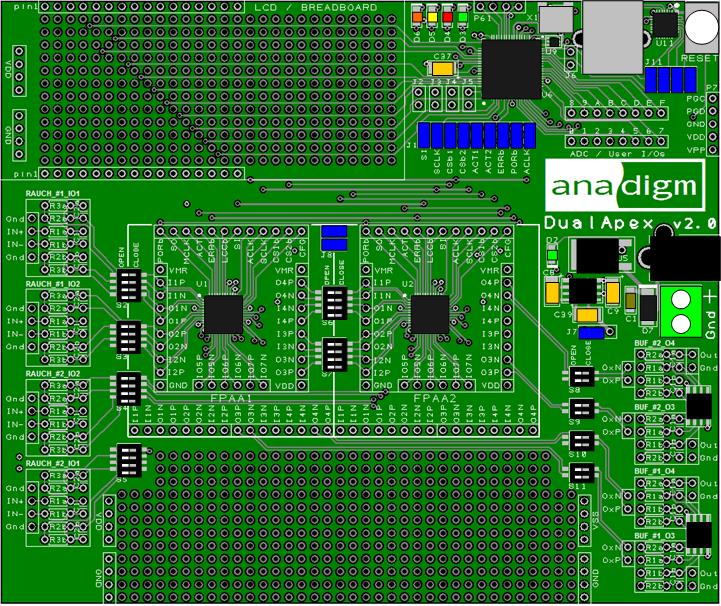
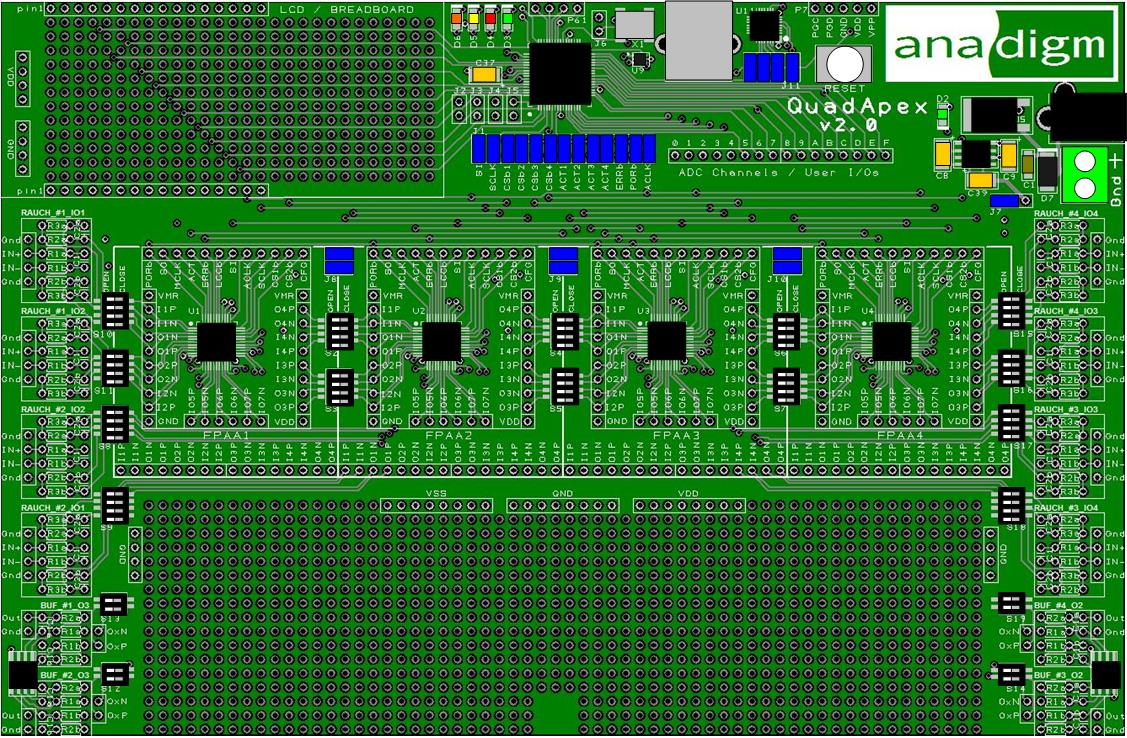
Okika’s FPAA platforms fit into robotic control architectures in two primary ways.
FlexAnalog devices are suited for programmable analog front-end processing, filtering, signal conditioning, and control-loop support. These functions are often located directly between the sensor layer and the digital processing layer.
SoC FPAA devices extend that concept by combining programmable analog fabric with integrated digital resources. This makes them relevant for more advanced mixed-signal control and sensor-response applications.
For defense robotics, remotely piloted vehicles, and autonomous systems, the architectural benefit is straightforward: not every control response needs to begin after digitization. Some responses can happen earlier, closer to the sensor, closer to the actuator, and closer to the physical event itself.
Building More Responsive Robotic Systems
As robotic systems become more autonomous, control architecture matters as much as compute architecture. The platforms that perform best in the field will not simply be the ones with the most digital processing power. They will be the ones that place the right type of processing in the right part of the system.
FPAAs give engineers another layer to work with: reconfigurable analog control that can operate where latency, feedback behavior, and deterministic response matter most.
For robotic control systems, that can mean faster feedback response, lower control-loop latency, reduced digital workload, and more predictable behavior in time-sensitive functions.