OTC2312 FlexAnalog™ FPAA Shield Brings Programmable Analog Signal Processing to the Arduino Ecosystem
A new Arduino Uno-form-factor FPAA shield enables real-time configurable analog signal processing for education, prototyping, and advanced embedded applications.
Colorado Springs, CO – June 15th, 2026 — Okika Devices today announced the introduction of the Arduino Shield for the Arduino ecosystem. Built on Okika’s FlexAnalog™ FPAA technology, the new Arduino Uno-form-factor shield brings real-time, software-configurable analog signal processing to developers, educators, and researchers working across embedded, industrial, and experimental domains.
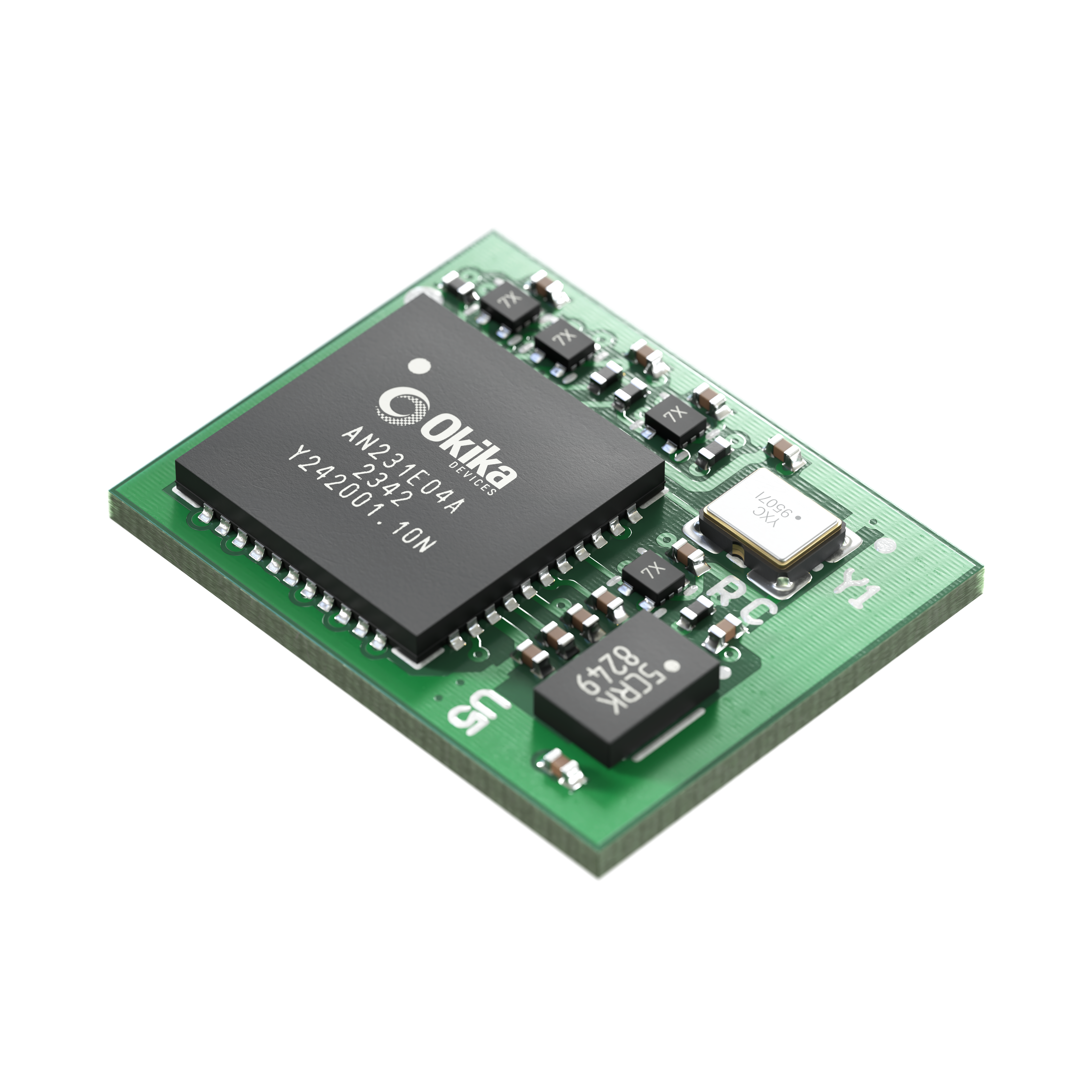
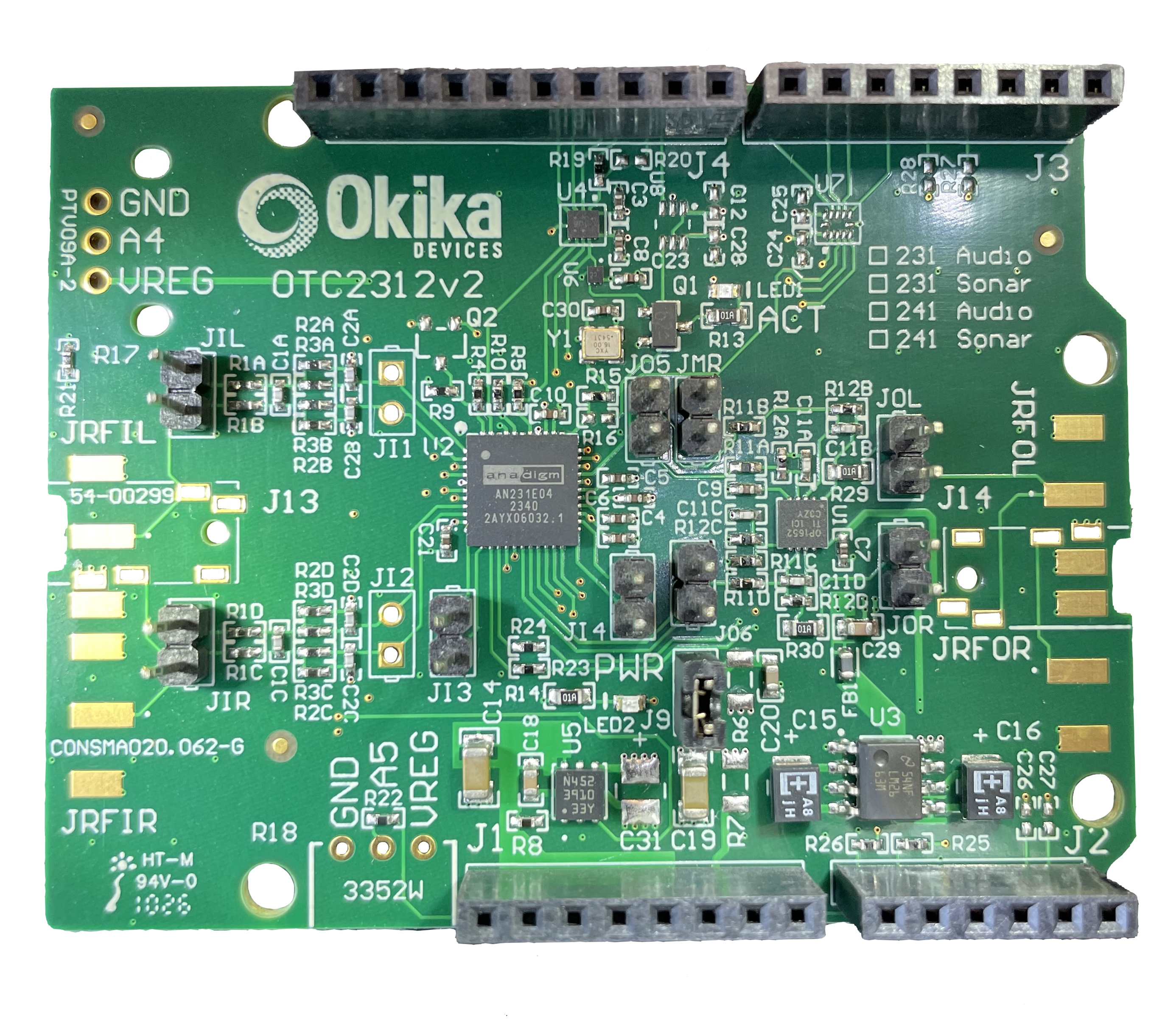
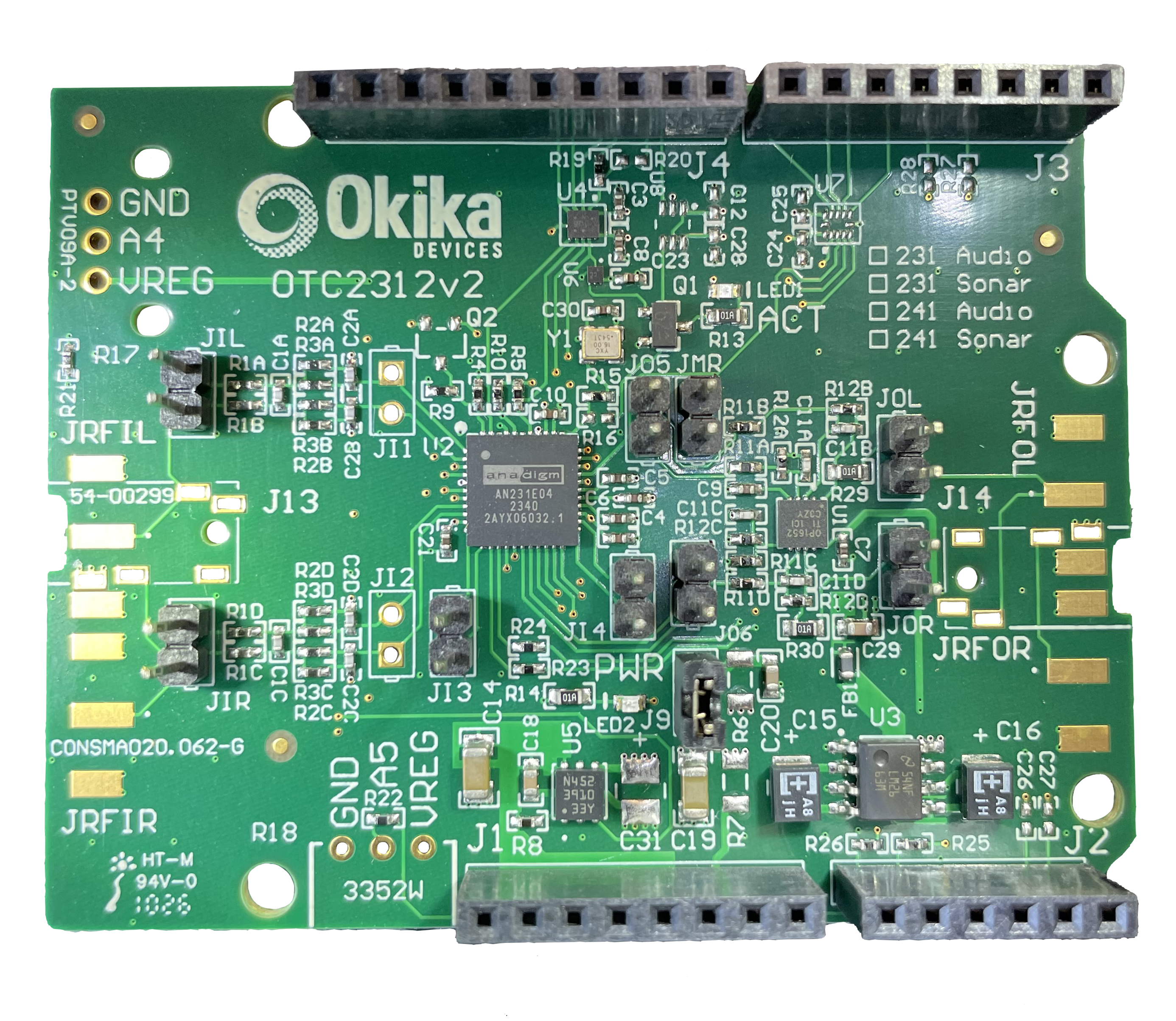
The Arduino Shield (OTC2312 FlexAnalog™ FPAA Shield) introduces a flexible and accessible way to explore programmable analog computation directly within the Arduino ecosystem. Built around the AN231E04 Field Programmable Analog Array (FPAA), the shield delivers a compact, stackable solution for real-time analog signal design, bridging the gap between traditional analog circuits and software-defined hardware.
Designed in the widely adopted Arduino Uno shield form factor, the Arduino Shield enables engineers, researchers, educators, and hobbyists to implement and iterate analog systems without redesigning physical circuitry. Instead, analog signal paths are defined and reconfigured in software using a library of configurable analog modules (CAMs), allowing rapid experimentation and deployment.
A New Approach to Analog Design
At the core of the Arduino Shield is the AN231E04 FPAA, capable of supporting analog signals up to 400 kHz (AN231 configuration). This makes the platform suitable for a wide range of real-world analog applications, from low-frequency sensor conditioning to high-speed signal processing.
Using Okika’s Designer software, users can construct analog systems from a library of 43 configurable analog modules. These can be dynamically updated, allowing circuits to evolve in real time without hardware modifications. A defining capability of the FlexAnalog™ architecture is simultaneous register updating, enabling smooth transitions in system behavior, which is useful in applications such as time-varying gain control, adaptive filtering, and dynamic signal conditioning.
Hardware Designed for Practical Integration
The Arduino Shield is built with both flexibility and compatibility in mind. Key hardware features include:
- AN231E04 FPAA for programmable analog signal processing
- Arduino Uno shield form factor for plug-and-play integration
- Dual analog signal channel support
- Fully differential signal path architecture
- On-board differential-to-single-ended converters for bench equipment compatibility
- 16 MHz on-board oscillator
- Integrated 3.3V regulator and -3.3V charge pump
- 5V to 3.3V level shifters for SPI programming
- Support footprints for 3.5mm stereo audio jacks
- Dual SMA input/output footprints for RF and instrumentation use
- Potentiometer input footprints for interactive control
- Current monitoring header pins for system analysis
The board also includes configurable SPI chip-select population options, enabling integration flexibility across different system architectures.
Designed for Stackable and Cross-Platform Use
While optimized for Arduino Uno compatibility, the Arduino Shield is not limited to a single ecosystem. It can be used alongside other microcontroller platforms, including ESP32, Raspberry Pi, and BeagleBone, through standard wired connections.
The shield maintains full stackability, allowing additional Arduino-compatible modules to be mounted on top without requiring jumper wire reconfiguration. This makes it suitable for multi-layer prototyping environments where analog processing must coexist with digital control, communication, or sensing modules.
Application Areas
The Arduino Shield is designed for both educational and professional use across a wide range of analog signal processing domains:
- Audio filtering and analog effects design
- Sensor signal conditioning systems
- Ultrasonic and sonar baseband processing
- Anti-aliasing filters for ADC front-ends
- Industrial automation and process control
- Biomedical instrumentation prototyping
Its ability to dynamically reconfigure analog behavior makes it particularly well-suited for research into adaptive systems and time-variant signal processing techniques.
Enabling a New Class of Embedded Analog Systems
By combining programmable analog hardware with a familiar Arduino development environment, the Arduino Shield lowers the barrier to entry for complex analog system design. It enables users to move beyond fixed analog circuits and into a model where signal behavior can be iterated in software, tested in real time, and deployed without hardware redesign cycles.
The FlexAnalog™ FPAA architecture represents a step toward more adaptive embedded systems, where analog signal paths are no longer static but continuously tunable in response to application demands.
Availability
The Arduino Shield (OTC2312 FlexAnalog™ FPAA Shield) is available for evaluation and integration into educational labs, research environments, and prototype development workflows beginning June 19th, 2026.