Military autonomous systems do not operate in ideal conditions. They may be deployed in contested electromagnetic environments, exposed to vibration and shock, limited by battery life, or required to function when communications are degraded or denied.
In those conditions, autonomy cannot depend entirely on remote control or uninterrupted data links. The platform has to make certain decisions locally.
That does not mean every decision must be complex. Some of the most important decisions in an autonomous system are fast, local responses to physical conditions: detect an obstacle, identify a relevant signal change, protect a motor, adjust power behavior, or recognize that a sensor signal has crossed a safety threshold.
These responses begin at the sensor.
The Problem with Sending Every Signal Through the Digital Chain
Most autonomous electronic systems are built around a familiar digital architecture. Sensors produce analog signals. Those signals are conditioned, digitized through ADCs, and then passed to digital compute resources such as microcontrollers, processors, FPGAs, or AI accelerators.
After processing, the system issues commands to actuators, motors, or other subsystems.
That architecture is powerful, and it is not going away. Digital processing is essential for mapping, navigation, target classification, mission planning, communications, and coordination across subsystems.
But there is a problem with treating digitization as the starting point for all useful intelligence.
By the time a signal has passed through the ADC and entered the digital pipeline, the system has already paid several costs. It has consumed power. It has introduced sampling delay. It may have added jitter. It has converted a continuous physical signal into a discrete representation. It has also pushed more data into the digital chain, even when only a small part of that data is useful for the immediate decision.
What Sensor-Level Intelligence Means
Sensor-level intelligence means giving the sensor layer more responsibility.
Instead of passing every raw signal downstream and asking the digital system to do all the work, the front end can extract useful information earlier. The digital system then receives cleaner, more relevant, lower-volume information.
Field Programmable Analog Arrays, or FPAAs, make this possible by allowing selected signal-processing functions to happen before full digitization. In practical terms, that means sensor signals can be filtered, conditioned, compared, shaped, or reduced to meaningful features while they are still in the analog domain.
This does not replace the platform’s digital brain. It strengthens the part of the system where autonomy begins.
How FPAAs Enable Edge Autonomy
Edge autonomy depends on the ability to make useful decisions close to where data is collected. For military autonomous systems, that can include unmanned ground vehicles, aerial drones, remotely piloted vehicles, maritime platforms, unattended sensors, and distributed robotic systems.
FPAAs support edge autonomy by moving selected intelligence closer to the physical signal.
A platform may still use digital processing for complex decisions, but the FPAA can help identify important signal behavior earlier in the chain. That can include detecting thresholds, filtering noise, extracting features, shaping sensor inputs, or supporting immediate response behavior.
The result is not a fully analog autonomous system. The result is a more efficient mixed-signal architecture.
Analog Feature Extraction Before Digitization
Many sensors generate more data than the system needs at any given moment. A camera, IMU, acoustic sensor, pressure sensor, current sensor, or proximity sensor may produce continuous streams of information, but the system may only need specific features, events, or thresholds for a given function.
Analog feature extraction can reduce this burden.
By processing selected signals before digitization, an FPAA can help limit the amount of raw data that reaches the digital system. That is especially useful when the platform is already handling multiple sensors, communications tasks, control functions, and mission software.
In this kind of architecture, the digital system receives information that is more useful and less wasteful.
Local Event Detection in Autonomous Defense Systems
Autonomous defense systems often need to recognize events before they need to interpret everything around them.
A platform may need to know that a signal crossed a threshold, that a sensor pattern changed, that a power condition moved outside an expected range, or that an obstacle-related input requires attention. Those are not always mission-level decisions. Many are local edge decisions that help the larger system respond more efficiently.
FPAAs can support this layer by enabling analog-domain filtering, comparison, conditioning, and event-oriented signal processing before the data reaches the main digital controller.
That makes sensor-level intelligence especially useful for systems that need to respond locally without pushing every signal through the full digital stack.
Reducing Power Consumption in Autonomous Platforms
Power is one of the hardest constraints in military autonomous systems. Small unmanned platforms, battery-powered sensors, and edge-deployed robotic systems must balance processing capability with endurance.
Constantly digitizing and moving high-volume sensor data consumes energy. It also increases the burden on downstream compute resources.
FPAA sensor processing can reduce unnecessary digital activity by handling selected front-end functions in the analog domain. If the system can filter, condition, or extract relevant information before digitization, the digital processor does not need to handle every raw signal in full detail.
That can help preserve power for the functions that truly need digital processing.
Supporting Operation When Communications Are Degraded or Denied
Military systems cannot always depend on reliable communications. Jamming, distance, terrain, emissions control, and network disruption can all limit remote control or high-bandwidth connectivity.
A platform that depends on continuous remote input becomes vulnerable when the link is degraded. A platform with stronger local response capability can continue to detect events, enforce basic limits, and preserve essential behavior even when higher-level coordination is interrupted.
This is one reason sensor-level intelligence matters for defense robotics and autonomous systems. It helps the platform retain useful local behavior when external communication is limited.
FPAA Applications in Military Autonomous Systems
FPAAs are relevant for several sensor-level and edge-processing functions in military autonomous platforms.
Obstacle Detection Processing
An FPAA can support local preprocessing for obstacle-related signals, helping the system identify relevant changes before sending data through the full digital chain.
Threshold and Event Detection
Some autonomous functions depend on recognizing whether a signal has crossed a defined condition. FPAAs can support programmable analog behavior for threshold detection, event triggers, and protective response functions.
Sensor Signal Qualification
Before a signal reaches the main processor, the system may need to filter noise, reject unwanted behavior, or condition the input. FPAA-based front-end processing can help improve the quality of information reaching downstream electronics.
Power-System Monitoring
Power behavior can change quickly in mobile and edge-deployed systems. FPAA-based front-end processing can help monitor and respond to power-related signals with less digital overhead.
Distributed Sensor Modules
Not every autonomous function needs to be centralized. FPAAs can help distributed sensor modules perform useful local preprocessing before sending information to the broader system.
Okika FPAA Platforms for Sensor-Level Intelligence
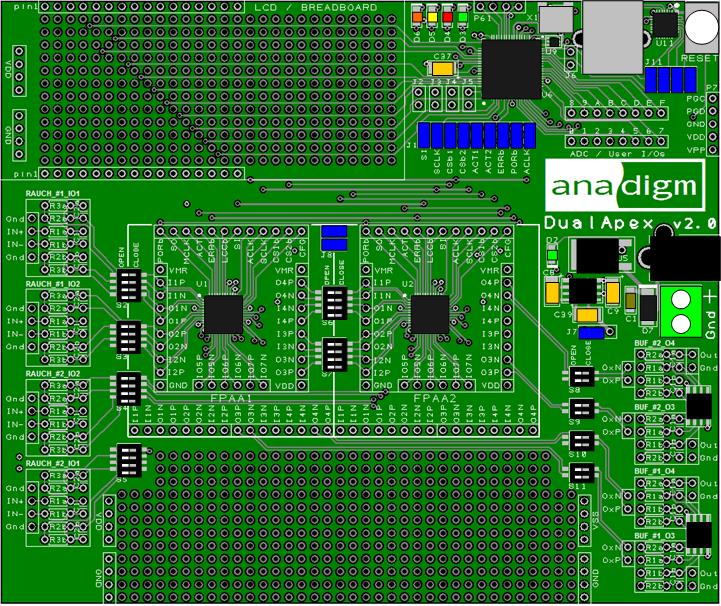
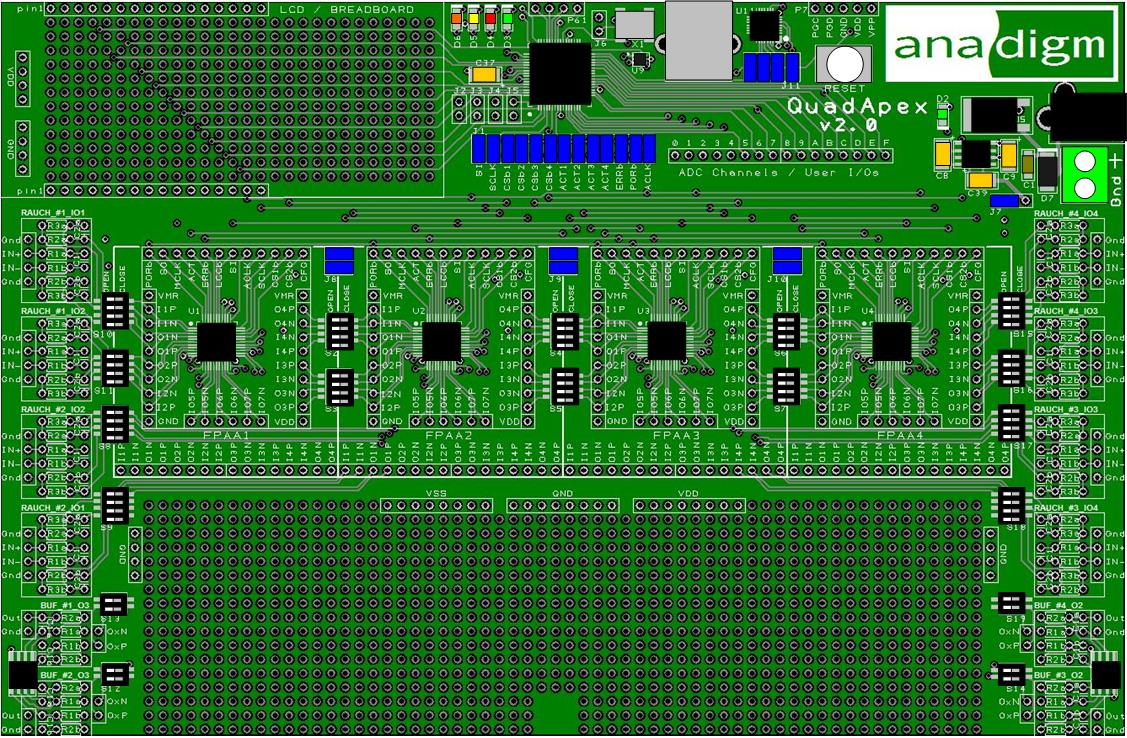
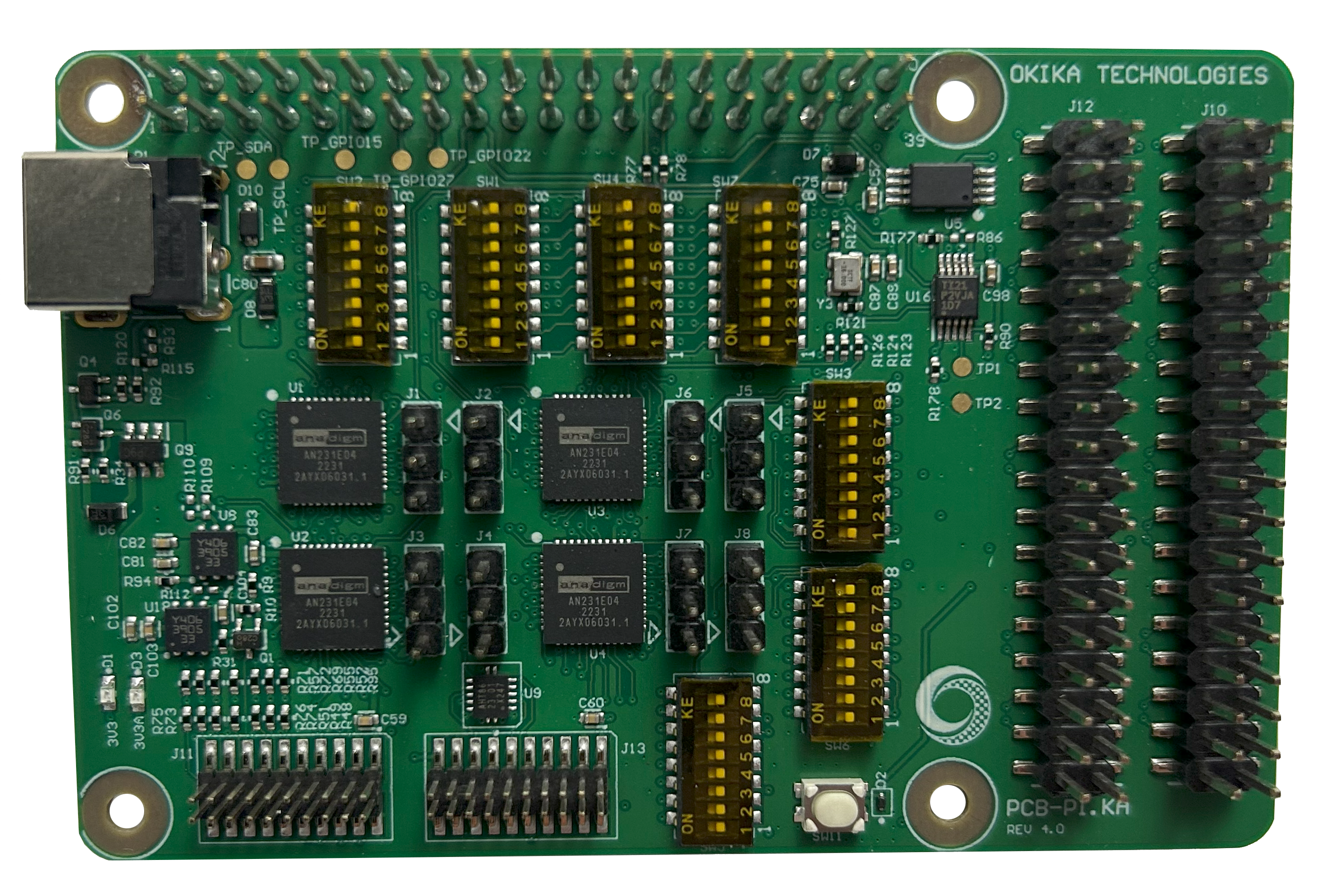
Okika’s FlexAnalog platform is designed for programmable analog functions such as filtering, amplification, signal conditioning, and control-loop support. These are the kinds of functions that often sit directly between the physical sensor and the digital system.
Okika’s SoC FPAA platform extends the concept further by combining programmable analog fabric with embedded digital resources. That makes it relevant for applications where analog-domain preprocessing, adaptive front-end behavior, and mixed-signal decision support need to work together.
In defense systems, this type of architecture can be especially valuable because platforms may need to handle new sensors, new environments, new mission profiles, or new constraints.
A fixed analog front end can become a limitation. A fully digital approach may add more latency, power draw, or system complexity than certain edge functions require. A field programmable analog layer gives engineers another option.
Strengthening the Front End of Autonomous Systems
The strongest case for FPAAs is not that they make autonomous systems “smarter” in the abstract. It is that they place useful intelligence closer to the physical signal.
That distinction matters. Autonomy is often described as a software problem, but autonomous behavior depends on the entire signal chain. A platform cannot make timely decisions if the information reaching its controller is delayed, noisy, power-intensive, or unnecessarily bloated.
The sensor front end is not just a passive gateway into the digital system. It can be an active part of the autonomy architecture.
For military robotic platforms, remotely piloted vehicles, unattended systems, and other edge-deployed electronics, FPAAs make it possible to build a more responsive front end. They can support local detection, analog feature extraction, and reduced data burden before the signal reaches the main compute layer.
That is where sensor-level intelligence becomes useful. It is not about replacing digital autonomy. It is about strengthening the layer where autonomy begins.