
Modern embedded systems and instrumentation platforms depend on clean analog signals. Whether conditioning sensor outputs, suppressing noise before an ADC, or building precision measurement equipment, analog filtering remains one of the most important parts of signal chain design.
The Chameleon™ OTC931xL series was created to simplify that process.
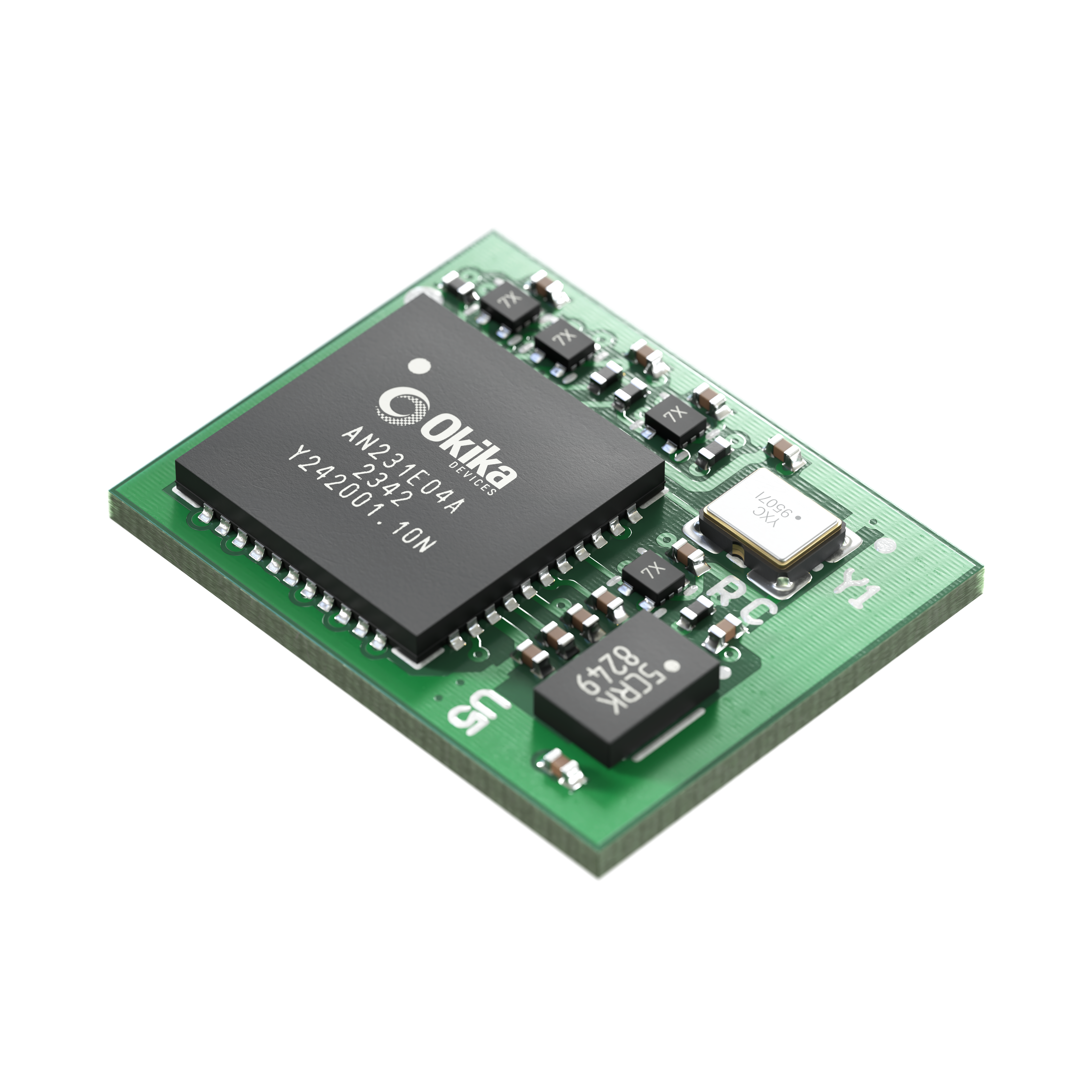
Built on programmable analog technology, the OTC931xL family delivers production-ready, characterized 8th-order Butterworth low-pass filtering in a compact module format, with cutoff frequencies ranging from 10 Hz to 100 kHz.
Instead of spending time designing, tuning, validating, and debugging complex active filter circuits, engineers can integrate a pre-configured analog filter module directly into their system.
What Is the Chameleon OTC931xL Series?
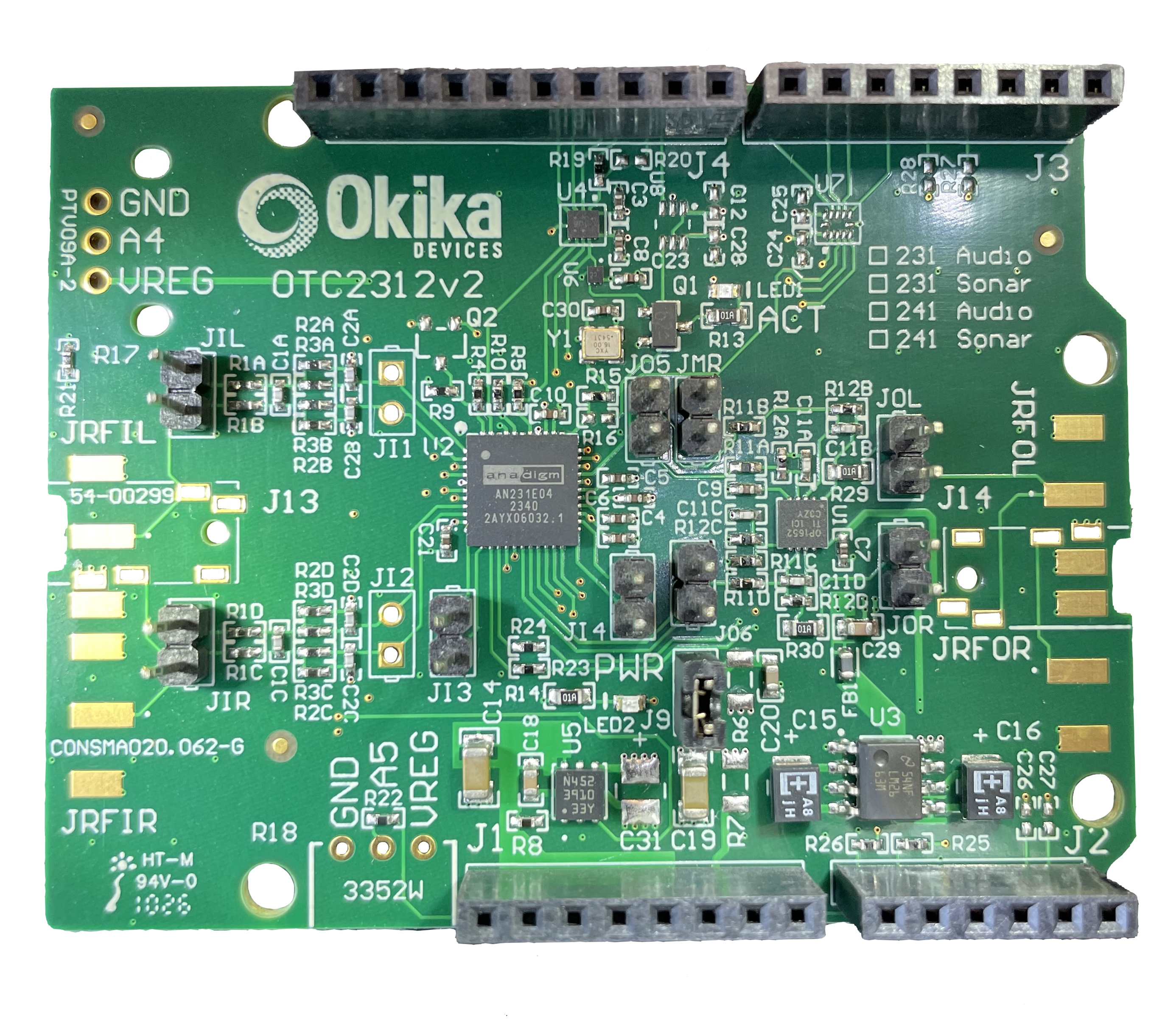
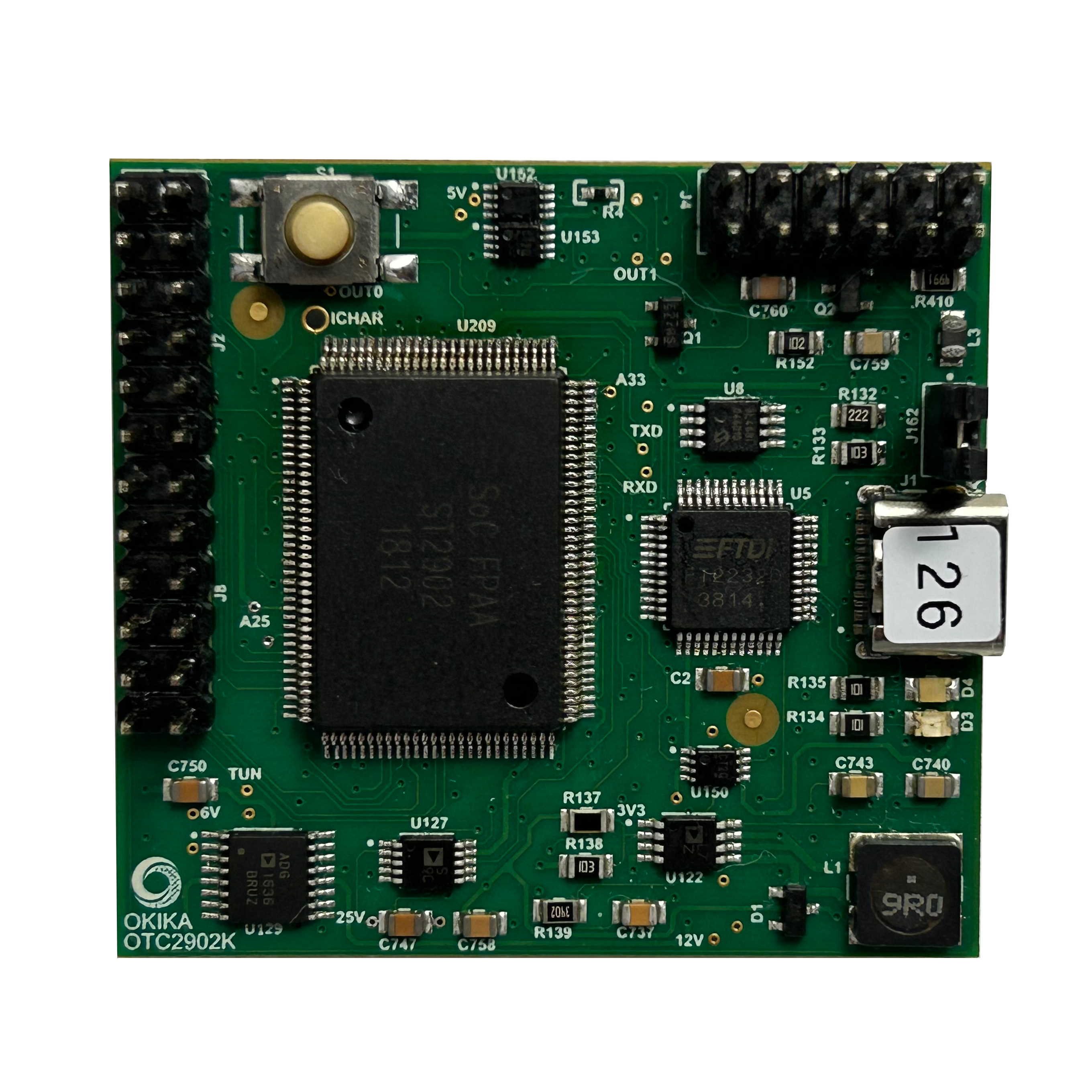
The OTC931xL series consists of switched-capacitor low-pass filter modules based on the Okika Devices AN231E04 Field Programmable Analog Array (FPAA).
Each module is factory-programmed and characterized as a fixed-function 8th-order Butterworth filter, combining the flexibility of programmable analog hardware with the convenience of an application-ready module.
The result is a compact analog filtering solution that provides precision low-pass filtering, fully differential signal paths, and production-ready performance in a format that is easy to integrate into embedded systems, sensor interfaces, and industrial electronics.
For engineers searching for a programmable analog filter solution without the complexity of discrete analog design, the Chameleon platform offers a streamlined alternative.
Ideal Applications
The OTC931xL series is well suited for applications such as:
- sensor signal conditioning
- anti-aliasing before ADCs
- industrial instrumentation
- biomedical signal acquisition
- laboratory equipment
- vibration analysis
- embedded analog front ends
Its combination of programmable analog technology, characterized filtering behavior, and compact implementation makes it particularly attractive for engineers seeking low-latency analog signal processing without the complexity of custom discrete filter design.
Why Butterworth Filtering?
The Butterworth response is widely used because it prioritizes smooth, predictable signal behavior.
Unlike ripple-focused filter responses, Butterworth filters maintain a flat passband while minimizing ringing in step-response applications. This makes them especially useful for instrumentation, sensor conditioning, biomedical systems, industrial monitoring, and data acquisition applications where signal integrity matters.
The OTC931xL series delivers these benefits in a compact, pre-characterized module without requiring engineers to build and tune complex multi-stage analog filter circuits from scratch.
Reduce Analog Design Complexity
Designing a high-order analog filter using discrete components often requires multiple op-amps, precision passive components, iterative tuning, and extensive validation.
The Chameleon OTC931xL modules reduce that burden by providing a pre-configured filtering solution with characterized performance. Instead of spending development time refining analog stages and compensating for tolerances, engineers can focus on higher-level system development.
This can accelerate prototyping, simplify integration, and reduce analog design risk in embedded systems and mixed-signal electronics projects.
Fully Differential Signal Paths for Better Signal Integrity
One of the defining advantages of the OTC931xL architecture is its fully differential internal signal path.
This approach improves common-mode noise rejection, maximizes dynamic range, and reduces susceptibility to ground noise. Differential outputs can connect directly to differential or single-ended ADCs, making the modules suitable for mixed-signal embedded systems and precision instrumentation applications.
For electrically noisy environments, differential signal handling can significantly improve measurement stability and real-world analog performance.
Designed for Easy System Integration
The onboard input amplifier simplifies interfacing with ground-referenced signals in single-supply systems using only a few passive components.
The module’s compact HDI implementation also enables a denser analog solution than is typically achievable using low-cost PCB technology and discrete analog circuitry.
For engineers building sensor front ends, embedded instrumentation, or industrial control systems, this can substantially reduce analog design overhead while shortening development time.
Why Use a Module Instead of an FPAA Chip?
In applications where dynamic, on-the-fly analog reconfiguration is required, a fully programmable FPAA chip may be the best choice.
However, many systems simply require reliable, validated filtering without additional firmware or programming complexity.
The OTC931xL modules are designed for these use cases. Because the configuration is stored directly in the onboard EEPROM, the module can operate without requiring continuous microcontroller management or runtime programming.
This allows engineers to integrate programmable analog functionality with the simplicity of a fixed-function analog filter module.
Addressing Switched-Capacitor Noise Concerns
Switched-capacitor technology is sometimes associated with concerns about clock feedthrough and switching artifacts.
In practice, these effects can often be managed effectively because the analog clock frequency typically operates well above the target signal bandwidth. Simple RC filtering can suppress clock feedthrough, and additional filtering stages may be implemented using spare onboard resources when needed.
The module also provides the analog clock as an output, allowing downstream ADC synchronization to avoid sampling during switching events.
These design considerations help maintain clean analog performance while preserving the flexibility and compactness of switched-capacitor filter implementations.
Open and Flexible Development
Standard Product configurations include open-source configuration and software circuit files, giving engineers the ability to inspect, modify, and intentionally reprogram module behavior when desired.
For customers developing proprietary systems, custom configurations can also be deployed while maintaining customer ownership of the configuration files and application-specific intellectual property.
This flexibility allows the Chameleon platform to support both rapid prototyping and long-term analog product development.
Bringing Programmable Analog Technology Into Real-World Systems
The Chameleon OTC931xL series demonstrates how programmable analog technology can simplify complex analog design challenges while maintaining precision, flexibility, and compact integration.
By combining FPAA technology with characterized fixed-function implementations, the OTC931xL modules provide a practical path toward faster analog development and easier deployment of high-performance filtering systems.
For engineers searching for precision analog filter modules, switched-capacitor low-pass filters, or FPAA-based analog signal processing solutions, the Chameleon platform offers a compelling alternative to traditional discrete analog filter design. It delivers the flexibility of a programmable analog system with the simplicity of a drop-in fixed-function analog module, helping customers shorten development cycles, reduce hardware redesigns, lower implementation cost, and adapt end products as requirements evolve over time.